Solar energy is really becoming popular in Karachi. The cost of electricity is going up. There is sunshine everywhere. So it makes sense for people to consider energy as a good investment for the future. There is something to think about. Fibre Solar Panel are not the only thing that matters. The structure that holds the panels is just as important as the solar panels.
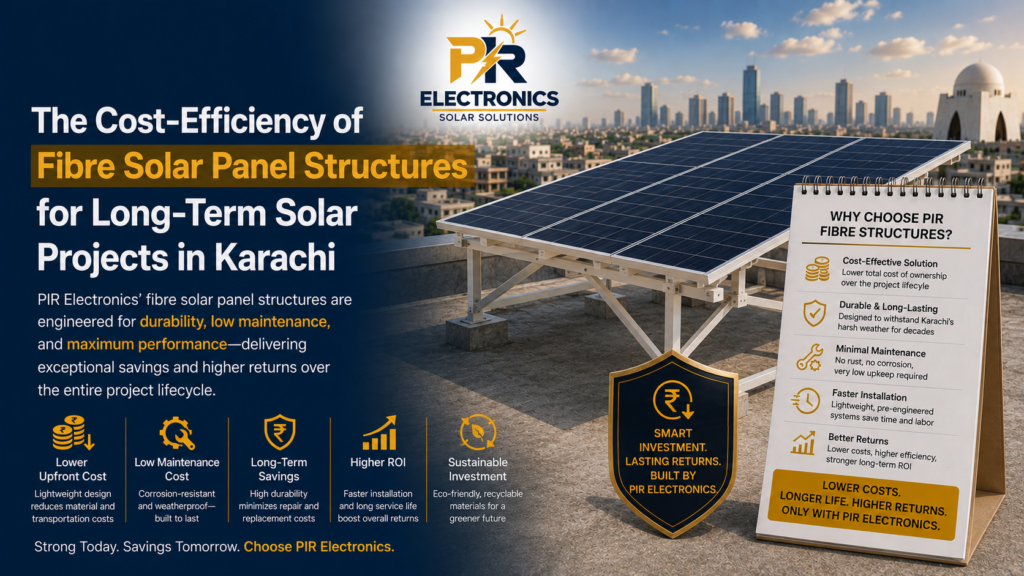
The structure decides how long the solar energy system will last, how much money you will spend to maintain it and how much money you will actually save from using solar energy. That’s where fibre solar panel structures start to shine, especially in Karachi’s harsh climate. They’re built to save you money and trouble down the road.
Table of Contents
Why Structure Matters for Solar Costs
When you put in a solar project, the upfront cost is just the beginning. Over time, you’re dealing with rust, repairs, replacements, and sometimes your system stops working while you fix things. If you go with steel or galvanised iron mounts, they seem cheap at first. But in Karachi’s humid, salty air, those savings disappear fast. The metal corrodes, joints get loose, and you’re calling for repairs way more than you planned.
Fibre solar panel structures flip that script. They’re made to handle Karachi’s harsh weather and salty air for years, without piling up extra costs or headaches.
Karachi’s Climate: Tough on Solar Mounts
The city’s climate really puts solar structures through the wringer:
- Hot days make metal parts expand and loosen up.
- Humidity and salty air speed up rust and eat away coatings.
- Strong seasonal winds put even more stress on already weakened frames.
All this means you’re fixing or even replacing metal mounts earlier than you’d like—and paying for it.
Why Fibre Structures Last Longer
Fibre solar panel structures use advanced composites, with fibreglass and protective resins. Metal can rust or break down when it’s wet, but fibre shrugs it off. PIR Electronics actually designs these fibre structures for Karachi’s conditions, so they stay solid and reliable year after year, without you having to shell out for constant repairs.
Here’s why fibre’s better:
- It doesn’t rust or oxidise—ever.
- It handles Karachi’s heat without warping.
- It stays strong in humid, salty air.
Less Maintenance, More Savings
One of the biggest perks? Hardly any maintenance. Metal frames need new paint, rust treatment, new bolts, and sometimes serious repairs. Those bills stack up fast.
With fibre structures, you don’t need anti-rust coatings or repainting, and you’ll spend way less on labour and service. For big installations or anyone looking long-term, those savings really add up over the years. It’s a more innovative way to go solar in Karachi, no question.
Stable Performance Improves Energy Output
If you want your solar panels to keep working at their best, you can’t ignore structural stability. Even a slight shift—maybe from the heat or a bit of rust—can throw off the alignment and cut down how much energy your system makes over time. Fibre structures solve this problem by holding their shape and strength, so your panels stay locked in the correct position all year.
- Your panels keep the ideal angle for sunlight, day after day.
- No more losing efficiency because the whole thing shifted out of place.
- You get more energy over the lifespan of the project.
Fibre structures keep your system running smoothly—and that boosts your returns.
Longer Lifespan Means Better Return on Investment
They’re built to stick around as long as your solar panels do, so you don’t have to worry about swapping out the frame halfway through the project’s life.
- Your system runs longer without needing a costly replacement
- The overall cost of ownership drops
- You end up with a bigger return on your investment in the long run
Sustainable and Future-Ready Infrastructure
But it’s not just about saving money. Fibre structures are built for the future, too. They don’t need much upkeep, they stand up to harsh weather, and they don’t rust or break down easily. So you use fewer resources, cut down on waste, and support a greener way forward.
PIR Electronics puts real engineering into every design, focusing on both performance and sustainability—so you get solar setups that are good for your wallet and the environment.
Conclusion
For anyone planning solar projects in Karachi, fibre structures deliver more than just low starting costs. They keep maintenance down, stretch out the system’s life, and make sure you get steady energy even in Karachi’s challenging weather. They shrug off heat, humidity, and corrosion, which means better returns for decades.
PIR Electronics is all about building reliable, low-maintenance, climate-ready solar solutions for Karachi’s unique needs. Choosing fibre structures isn’t just about holding up panels—it’s about selecting a more innovative, long-term strategy for sustainable energy and solid financial results.