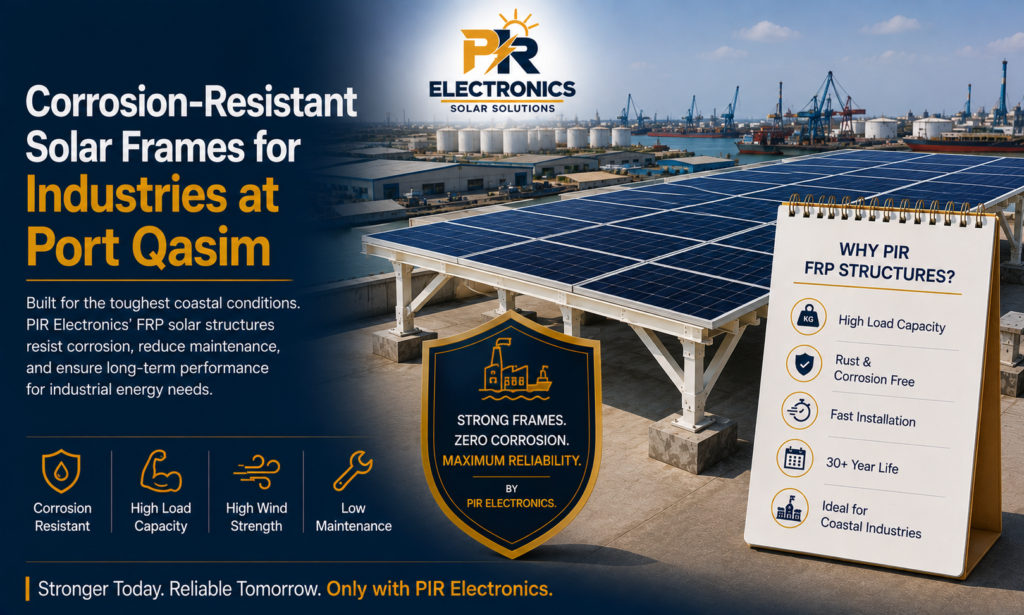
Port Qasim combines marine exposure with heavy industrial activity. Solar mounting systems may face salt-bearing air, humidity, heat, chemical emissions and standing water, making the supporting frame a critical part of any rooftop solar investment.
Selecting corrosion-resistant solar frames Port Qasim requires more than choosing a material described as rust-proof. Buyers must assess profiles, fasteners, clamps, anchors, base plates and interfaces between different materials. A strong module warranty cannot compensate for a frame that weakens, shifts or becomes difficult to maintain.
Table of Contents
Why Port Qasim Needs a Specialised Design
The Port Qasim Authority describes the area as Pakistan’s largest industrial zone, covering 15,474 acres. Its factories, terminals, warehouses and processing facilities create very different rooftop conditions.
A suitable coastal solar structure design should consider distance from the shoreline, wind direction, nearby exhaust outlets, roof drainage and chemicals released by operations. Two plants in the same industrial area may still need different materials and connection details.
Designers should also prevent contamination and trapped moisture around hollow profiles, base plates and panel rows.
How Corrosion Damages Solar Structures
Corrosion often begins at cut edges, damaged coatings, welds, bolts and areas where water remains trapped. Contact between dissimilar metals may also create galvanic corrosion when moisture and salts are present.
The US Department of Energy warns that corrosive environments can damage solar racking, fasteners, electrical enclosures and grounding components, creating performance and safety risks.
This is why industrial solar structures Karachi projects should be evaluated as complete systems. A corrosion-resistant main profile can still fail when unsuitable bolts, clamps or connection plates become the weak points.
Steel, Aluminium or FRP?
Hot-dip galvanised steel offers stiffness and fabrication flexibility. It can perform well when coating quality, drainage and maintenance are controlled, although cutting or welding can expose vulnerable areas.
Aluminium is lightweight and naturally corrosion resistant, but alloy grade, profile thickness and dissimilar-metal contact still need engineering review.
Properly specified FRP solar mounting systems provide low weight, electrical non-conductivity and resistance to conventional electrochemical rust. The Federal Highway Administration recognises lightweight construction and corrosion resistance among the advantages of FRP structural members.
FRP isn’t automatically suitable for every site. Resin type, ultraviolet protection, fire behaviour, chemical compatibility and long-term deflection must match the project.
Start With a Roof and Environmental Survey
A professional Port Qasim rooftop solar project should begin with documentation of the roof, supporting members and nearby industrial processes. The survey should record:
- Roof type and structural condition
- Truss and purlin spacing
- Existing corrosion or coating failure
- Drainage and standing-water locations
- Exhaust and chemical discharge points
- Cleaning and maintenance access
- Wind exposure and future expansion
New loads must transfer into suitable structural members instead of relying only on thin roof sheets.
Chemical Compatibility Matters
Factories may release acidic, alkaline or solvent-bearing vapours. A general claim that a frame is corrosion resistant isn’t enough for an aggressive site.
Buyers considering FRP solar mounting systems should request chemical-resistance data for the proposed resin. Steel proposals should explain coating systems, while aluminium proposals should identify alloy grades and isolation methods where dissimilar metals meet.
Clamps, cable supports and fasteners deserve equal attention because these smaller components can determine the reliability of the complete system.
Wind, Height and Structural Stability
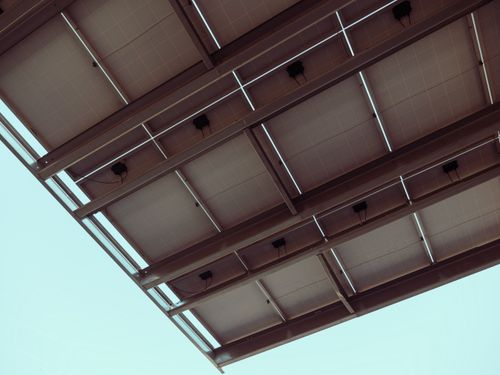
Large industrial roofs expose panel rows to changing wind pressure, especially near corners, parapets and elevated edges. Increasing frame height to create storage or working space underneath also increases structural demand.
Effective coastal solar structure design requires calculated member sizes, bracing, support spacing, anchors and panel clamps. Random ballast or reduced bracing can create unsafe load paths.
Buyers should request design assumptions for frame height, panel layout and wind exposure. Future panel additions must also be reviewed.
Connections Need Equal Attention
Bolts, plates, clamps and anchors transfer forces between structural members. For corrosion-resistant solar frames Port Qasim, connection details should prevent water traps and minimise contact between incompatible metals.
Fasteners should suit the environment and follow approved tightening requirements. FRP holes and edges must be prepared without damaging fibres, while cut or welded galvanised steel areas need suitable corrosion protection.
What a Professional Quotation Should Include
A proposal for industrial solar structures Karachi should identify:
- Main material, grade and profile dimensions
- Coating or resin specification
- Fastener and clamp materials
- Anchor and base-plate arrangement
- Support spacing and bracing
- Structural design assumptions
- Environmental limitations
- Waterproofing responsibilities
- Inspection requirements and warranties
Industrial buyers evaluating PIR Electronics’ solar structure services should request a site-specific layout, bill of materials and explanation of how the selected system responds to the property’s roof and environment.
Compare Lifecycle Cost
The cheapest frame may require repainting, replacement fasteners or shutdowns. Lifecycle comparison should include inspection labour, access equipment and panel removal for structural work.
FRP solar mounting systems may reduce surface-maintenance needs in suitable environments. Protected steel can remain practical for heavy-duty applications, while aluminium may suit lightweight modular arrays.
The correct choice comes from comparing technically equivalent designs rather than incomplete quotations priced only per kilowatt.
Inspection After Installation
Every Port Qasim rooftop solar structure needs periodic inspection. Teams should check coating damage, corrosion, cracked FRP, loose clamps, panel misalignment and movement around anchors.
Extra checks are sensible after severe weather or rooftop construction. Drainage paths should remain clear, and chemical deposits shouldn’t collect around connections.
Final Thoughts
Reliable corrosion-resistant solar frames Port Qasim begin with an environmental survey, structural calculations and complete material specifications. The main profile matters, but fasteners, clamps, anchors, drainage and workmanship often determine long-term performance.
A well-planned coastal solar structure design helps industrial facilities protect panels, roofs and maintenance teams. By treating the frame as essential infrastructure, buyers can make stronger procurement decisions and build more dependable solar assets.
FAQs
Is FRP always better than galvanised steel near the coast?
No. FRP can offer valuable corrosion resistance, but suitability depends on structural loads, resin quality, fire requirements, chemical exposure and connection design.
Can an existing steel frame be upgraded?
Possibly. It should first be checked for section loss, coating failure, weak connections and compatibility with the proposed panel layout.
Are low-height frames safer in strong winds?
Lower height may reduce some wind effects, but safety still depends on the complete engineering design, anchors and bracing.