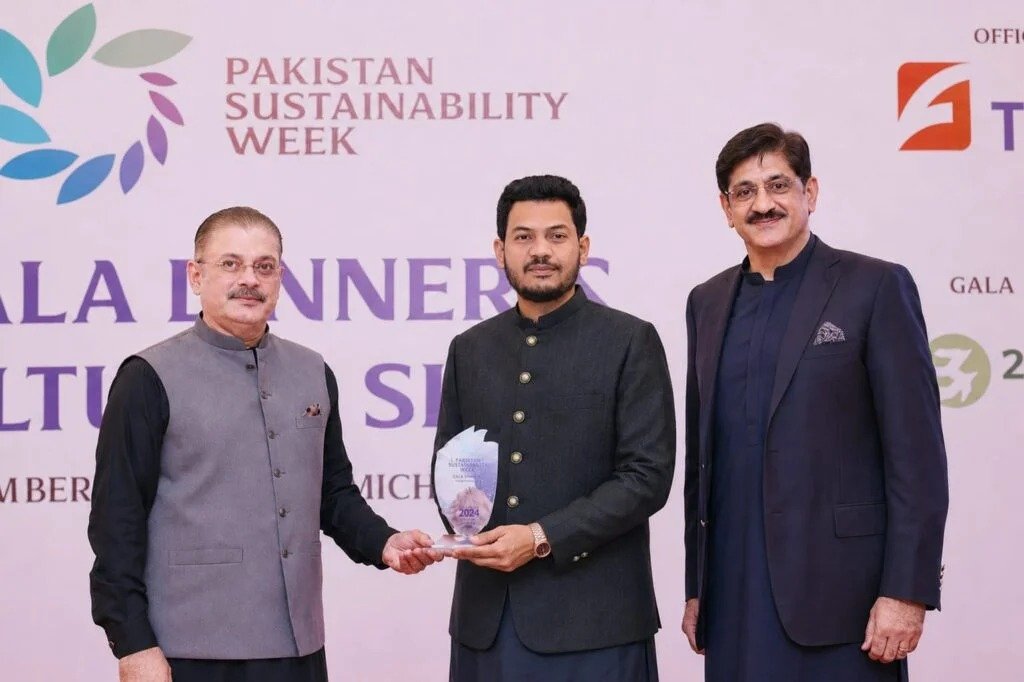
PIR Electronics began with a practical question: solar panels may last for decades, but will the structure supporting them remain strong for just as long?
Pir Zawwar had been working across different areas of the solar industry since 2018, including experience with solar businesses and SkyElectric. During this period, he saw Pakistan’s solar market grow as electricity prices, power shortages and energy uncertainty encouraged more homes and businesses to invest in rooftop systems.
Most industry conversations focused on panels, inverters, batteries and system capacity. Mounting structures received far less attention, even though they were responsible for holding expensive modules through Karachi’s heat, humidity, coastal air, rain and strong winds.
That gap led to the creation of PIR Electronics Karachi.
Table of Contents
The Problem Pir Zawwar Identified
Customers were investing significant amounts in solar systems with panels expected to operate for 25 years or more. However, many buyers didn’t ask how long the supporting frame would last.
Traditional metal structures could perform well when properly designed, treated and maintained. The problem was that quality varied considerably. Some frames used thin sections, weak bracing, poor-quality paint or unsuitable fasteners. Others were installed without giving enough attention to corrosion, wind exposure or roof loading.
In Karachi, these weaknesses could become more serious. Coastal moisture, salt-bearing air, pollution and standing rainwater can accelerate deterioration when materials and connections aren’t suited to the environment.
The U.S. Department of Energy notes that photovoltaic arrays need stable, durable mounting capable of supporting panels and resisting wind, rain and corrosion over decades.
Pir Zawwar realised that the solar industry needed more than another panel installer. It needed solar mounting innovation that addressed the structure as a long-term part of the energy system.

The Opportunity Behind PIR Electronics
The opportunity wasn’t simply to manufacture another type of frame. It was to introduce a mounting option that responded to several common concerns at once:
- Corrosion and repeated repainting
- Excessive rooftop weight
- Electrical conductivity
- Difficult transportation and handling
- Long-term exposure to Karachi’s climate
- Limited awareness of structural lifecycle
This led Pir Zawwar towards fiber-reinforced polymer, commonly known as FRP.
PIR Electronics publicly describes itself as Pakistan’s first flagship store to introduce FRP-based solar panel structures. Its current services include site surveys, feasibility planning, structure installation and panel mounting for residential and commercial projects.
The purpose was clear: make FRP solar structures Pakistan buyers could consider as an alternative to conventional metal frames.
Why FRP Became the Main Focus
FRP is a composite material made by combining reinforcing fibres with a polymer resin. Depending on the design, it can offer low weight, electrical non-conductivity and resistance to conventional electrochemical rust.
The Federal Highway Administration recognises lightweight construction and corrosion resistance among the advantages of FRP structural members.
For Pir Zawwar, these properties matched problems he had repeatedly observed in the solar market. A fiber solar structure Karachi solution could reduce the weight being transported and handled on rooftops while avoiding the same rusting process associated with untreated or damaged steel.
FRP wasn’t intended to be presented as a magical or maintenance-free material. Profile dimensions, resin quality, ultraviolet resistance, connections, clamps, bolts and anchoring still mattered. The structure had to be designed as a complete system rather than sold through a single material claim.
That understanding became central to PIR Electronics.
Starting With Limited Resources
Like many specialist businesses, PIR Electronics didn’t begin with every process, tool and resource fully established.
Introducing a relatively unfamiliar mounting material required research, testing and customer education. Pir Zawwar had to understand profile behaviour, connection methods, cutting requirements, rooftop handling and installation procedures.
Sourcing suitable components was another challenge. A dependable structure required more than FRP profiles. It also needed compatible bolts, clamps, plates, anchors and bracing details.
The team had to learn how to transport lightweight profiles without causing impact damage, prepare connection holes correctly and assemble structures without treating FRP exactly like steel.
Every early project became an opportunity to improve the design and installation process.
Creating a Professional Installation Process
PIR Electronics needed a structured process to distinguish itself from suppliers offering generic frames.
The first stage was the site survey. Every rooftop had different dimensions, access conditions and obstacles. Water tanks, stair rooms, drains, parapets, antennas and existing equipment could affect the layout.
The second stage was feasibility planning. The team had to consider the panel quantity, frame height, orientation, access routes and roof condition before deciding how the structure should be arranged.
The third stage involved preparing the profiles, supports and connections for the approved design. An effective fiber solar structure Karachi project couldn’t rely on random spacing or reduce the number of braces simply to save material.
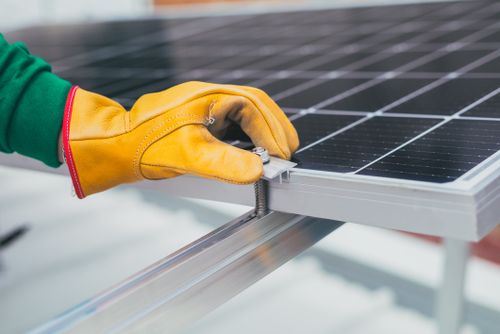
Installation was followed by alignment, panel mounting and a final inspection of connections and accessible mounting points.
PIR Electronics’ published process currently includes a complete site survey, feasibility reporting, structure installation and panel mounting. Its portfolio also shows completed projects in several parts of DHA Karachi.
Winning the First Customers
One of the earliest challenges was convincing customers to think beyond panels and inverters.
Many buyers were familiar with steel structures. FRP was less understood, which meant potential customers naturally asked questions:
- Is it strong enough to support solar panels?
- How does it behave in Karachi’s heat?
- Can it withstand wind?
- How are the profiles connected?
- Does it need repainting?
- How does it compare with steel or aluminium?
- What happens if a component is damaged?
These questions helped PIR Electronics develop clearer explanations and improve how the company presented its technical proposals.
Early residential projects allowed the team to demonstrate how a lightweight frame could be transported, assembled and installed on a crowded rooftop. Commercial enquiries introduced wider spans, larger arrays and more demanding access requirements.
Each completed project helped potential customers see the structure as a real engineering solution rather than an unfamiliar experiment.
Building Trust in a New Structure Category
Trust was essential because the mounting structure carries the entire panel array.
A structure may look simple after installation, but its performance depends on profile size, support spacing, height, bracing, anchors and connection details. Buyers needed confidence that PIR Electronics understood these factors.
Pir Zawwar also recognised that customers shouldn’t be expected to accept broad claims without explanation. They needed to know why a specific design was being recommended for their roof.
Building trust therefore required:
- Clear site assessment
- Honest material explanations
- Defined installation scope
- Visible profile and connection quality
- Careful rooftop work
- Professional communication
- Post-installation guidance
This approach helped establish PIR Electronics Karachi as a specialist in solar mounting rather than a general supplier selling one more solar product.
Learning Through Early Challenges
No two roofs were exactly the same.
Some properties had limited stair access, requiring every profile and tool to be carried through narrow spaces. Other rooftops contained water tanks, rooms, pipelines or shaded areas that reduced the available installation space.
Elevated structures created another level of complexity. Increasing height could preserve usable space underneath the panels, but it also increased wind exposure and usually required stronger bracing and anchoring.
Coastal locations brought greater attention to connections and metal accessories. Although FRP profiles don’t rust like ordinary steel, unsuitable bolts or clamps could still become vulnerable parts of the assembly.
These challenges strengthened PIR Electronics’ understanding of corrosion-resistant solar structures. The business learned that long-term performance depends on the complete mounting system, not only the main profile material.
Educating Customers About Structure Life
A major part of PIR Electronics’ work involved changing the questions buyers asked.
Instead of only asking about panel wattage and inverter capacity, customers needed to consider:
- How much weight will be added to the roof?
- Which material will support the modules?
- How will the structure resist wind?
- Will the frame require repainting?
- Are cleaning and inspection routes available?
- How will forces transfer into the building?
- Can the structure accommodate future expansion?
This education supported the wider adoption of FRP solar structures Pakistan projects.
It also helped buyers compare lifecycle value rather than initial price alone. A cheaper frame may become expensive when it needs repeated rust treatment, repairs or early replacement. A higher initial investment can be reasonable when it reduces long-term maintenance and supports safer rooftop operation.
Growth Through Referrals and Visible Projects
Word-of-mouth played an important role in the company’s development.
When one customer saw the handling, appearance and corrosion-resistant qualities of an FRP frame, neighbours and business contacts became interested. A residential installation could lead to another property survey, while a commercial project could create enquiries from businesses facing similar rooftop concerns.
Visible installations also helped explain the product. Customers could see that corrosion-resistant solar structures weren’t limited to small experimental systems. The material could be incorporated into residential, commercial and industrial mounting designs when the profile sizes and connections were engineered correctly.
PIR Electronics gradually developed a clearer market position around FRP structures, site-specific planning and professional installation.
From an Industry Observation to a Clear Vision
PIR Electronics started because Pir Zawwar noticed that the structure beneath solar panels wasn’t receiving enough attention.
His experience in the solar sector showed him that installing premium panels on a weak or short-lived frame didn’t create a dependable long-term system. The mounting structure had to reflect the expected service life, environment and value of the equipment it supported.
The company’s vision grew around that idea: introduce practical solar mounting innovation and make FRP technology more accessible to Pakistan’s solar users.
Today, PIR Electronics Karachi focuses on FRP solar structures, surveys, feasibility planning, installation and panel mounting. The business continues to promote a simple but important message—the structure isn’t a minor accessory. It’s the foundation of the complete rooftop investment.
The story of PIR Electronics began with an overlooked problem in Pakistan’s expanding solar market.
Pir Zawwar saw customers buying panels expected to last for decades while paying less attention to the frame carrying them. Karachi’s heat, humidity, coastal exposure and crowded rooftops made this gap particularly important.
Building the company required learning new materials, developing installation methods, training a team and educating customers about structure life. The early journey wasn’t only about selling a fiber solar structure Karachi solution. It was about creating awareness that the mounting system deserved the same attention as panels and inverters.
PIR Electronics turned that observation into a specialist business built around FRP solar structures Pakistan, professional planning and long-term structural value.
Planning a new rooftop installation or replacing a corroded frame? Contact PIR Electronics for a site survey and a structure recommendation based on your roof, panel layout and project requirements.
FAQs
1. Who founded PIR Electronics?
PIR Electronics was founded by Pir Zawwar after he identified a gap in Pakistan’s solar industry. While most companies focused on panels, inverters and batteries, he recognised the need for stronger, lighter and more corrosion-resistant mounting structures.
2. When did the idea for PIR Electronics begin?
The idea developed from Pir Zawwar’s experience in the solar industry since 2018. His work with solar businesses helped him understand the structural and maintenance challenges faced by rooftop solar users in Karachi.
3. What does PIR Electronics specialise in?
PIR Electronics specialises in FRP solar mounting structures, site surveys, feasibility planning, structure installation and panel mounting for residential, commercial and industrial properties.