
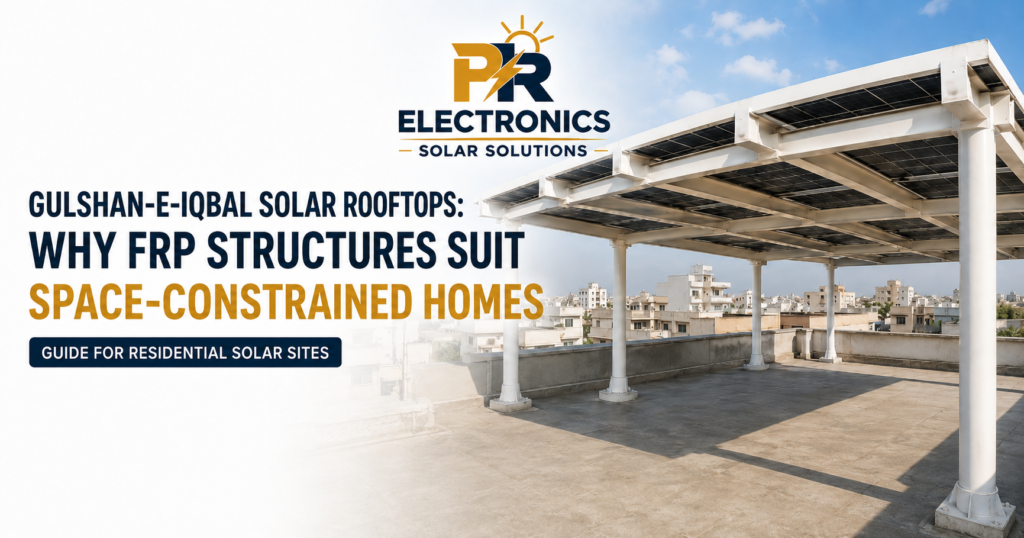
Solar adoption is changing how homeowners use rooftops across Karachi, and Gulshan-e-Iqbal is no exception. Many houses have water tanks, stair rooms, shade structures, boundary walls, and service areas competing for limited roof space. A well-planned Gulshan solar structure therefore has to do more than hold panels. It should preserve access, use space efficiently, and avoid unnecessary structural burden.
This is where FRP solar mounting can be useful. Fiber-reinforced polymer structures are lightweight and do not experience conventional electrochemical rust like steel. For homeowners comparing residential solar Karachi options, the mounting system deserves the same attention as panel efficiency and inverter capacity.
Table of Contents
Why Rooftop Planning Matters in Gulshan-e-Iqbal
Homes in Gulshan-e-Iqbal vary in age, height, roof layout, and available open area. Some properties have been extended over time, while others contain tanks or rooms added after construction. These differences make a one-size-fits-all frame unsuitable.
A Gulshan solar structure should start with an on-site assessment covering usable space, shade, drainage points, parapet walls, access routes, and rooftop equipment. For residential solar Karachi projects, planning should also preserve space for cleaning and water-tank access.
Pakistan’s Residential Solar Market Is Growing Fast
Better rooftop planning matters more as solar adoption rises nationwide. Ember reported that Pakistan imported about 17 GW of solar panels in 2024, roughly twice the previous year.
A Renewables First study reported that net-metered capacity reached about 6.1 GW in FY2025, while residential net-metering users grew by 148% between 2023 and 2024.
These trends show why residential solar Karachi installations should be planned as long-term rooftop assets. As more systems appear on urban homes, FRP solar mounting should be treated as part of the complete system rather than a secondary accessory.
Why FRP Can Suit Congested Residential Roofs
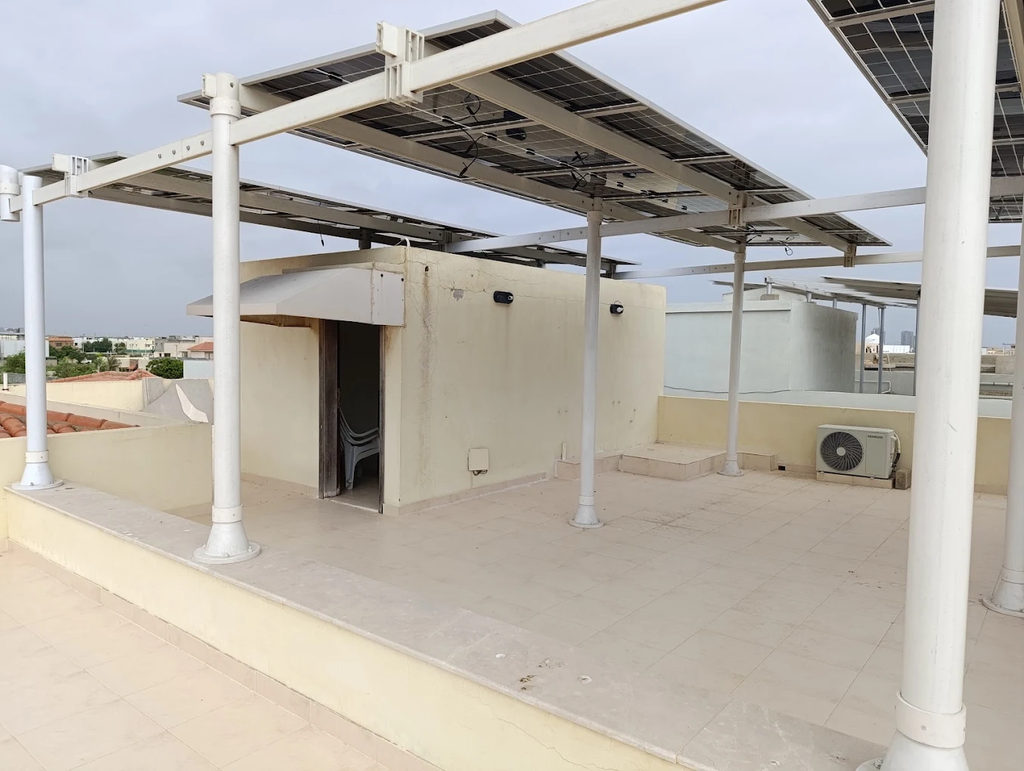
One practical advantage of FRP solar mounting is its relatively low weight. Lighter structural members can simplify transportation and rooftop handling, especially on multi-storey homes with narrow stairs.
For a Gulshan solar structure, lower frame weight can matter where a roof already contains tanks, masonry rooms, or other permanent loads. However, lightweight material does not remove the need for proper engineering. Profile dimensions, bracing, anchoring, panel arrangement, and wind loads must still be considered.
Better Use of Available Space
FRP solar mounting can be designed around rooftop obstacles instead of forcing every property into the same layout. A site-specific frame may help panel rows avoid tank access, drainage routes, or stair rooms while maintaining practical spacing.
This matters in residential solar Karachi installations because maximizing panel count should not mean blocking every usable section of a roof. Homeowners still need safe walking paths and cleaning access. A carefully designed Gulshan solar structure should balance electricity generation with normal rooftop use.
Material Choice Is Only Part of the Design
FRP has useful properties, but no mounting system should be selected on material alone. The full structure must suit the building, panel size, installation height, roof condition, and expected loads.
Good FRP solar mounting depends on properly specified supports, anchors, connections, cross-bracing, and workmanship. A roof with major cracks, leakage, significant alterations, or uncertain load capacity should be reviewed by a competent structural professional.
Pakistan’s Power Division also outlines technical requirements for distributed solar connections, reinforcing the need to plan rooftop systems as complete electrical and structural installations.
How PIR Electronics Approaches Residential Projects
PIR Electronics focuses on FRP-based solar structures and lists site surveys, feasibility planning, structure installation, and panel mounting among its services. For homeowners considering residential solar Karachi systems, a survey-led process matters because neighboring houses can have very different rooftop conditions.
The layout should respond to roof area, obstacles, access, panel dimensions, and building condition instead of being chosen only by system size. This makes FRP solar mounting part of a complete rooftop solution.
Long-Term Value Depends on Practical Access
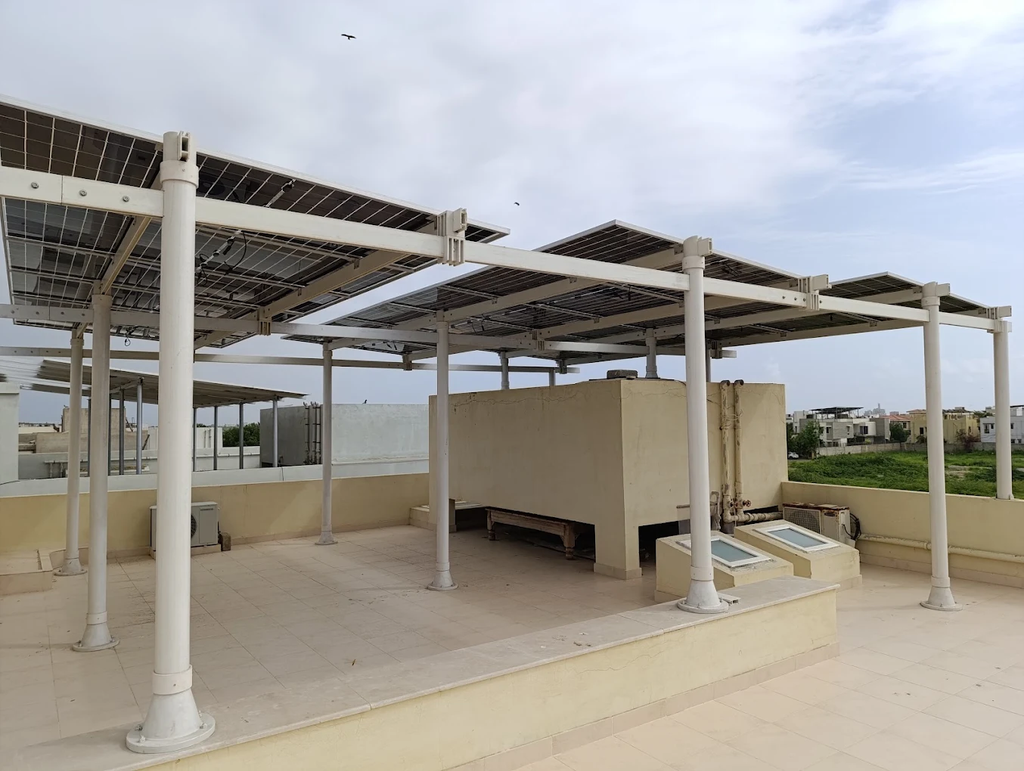
Solar panels may remain on a home for decades, so the support structure should be planned for long-term accessibility and stability. A well-designed Gulshan solar structure should keep essential roof functions accessible and use appropriately specified profiles, anchors, and connections.
For homeowners evaluating residential solar Karachi solutions, the question is not only how many panels can fit. It is whether the structure fits the roof safely and practically. With proper surveying and engineering, FRP solar mounting can provide a lightweight and durable option for space-constrained homes.
A final Gulshan solar structure design should reflect the actual roof rather than a generic drawing.
FAQs
Is FRP suitable for homes with limited rooftop space?
Yes. FRP structures can be configured around obstacles when the layout maintains safe access, suitable panel spacing, and proper structural design.
Can FRP structures be installed around water tanks and stair rooms?
Yes, provided the design maintains suitable clearances, access routes, anchoring locations, and maintenance space.
Does a lightweight FRP structure remove the need for a roof assessment?
No. Roof condition, existing loads, modifications, drainage, and anchoring areas should still be checked before installation.
Should homeowners install the maximum possible number of panels?
Not automatically. The layout should balance energy requirements with shading, roof capacity, cleaning access, maintenance routes, and safe spacing.