
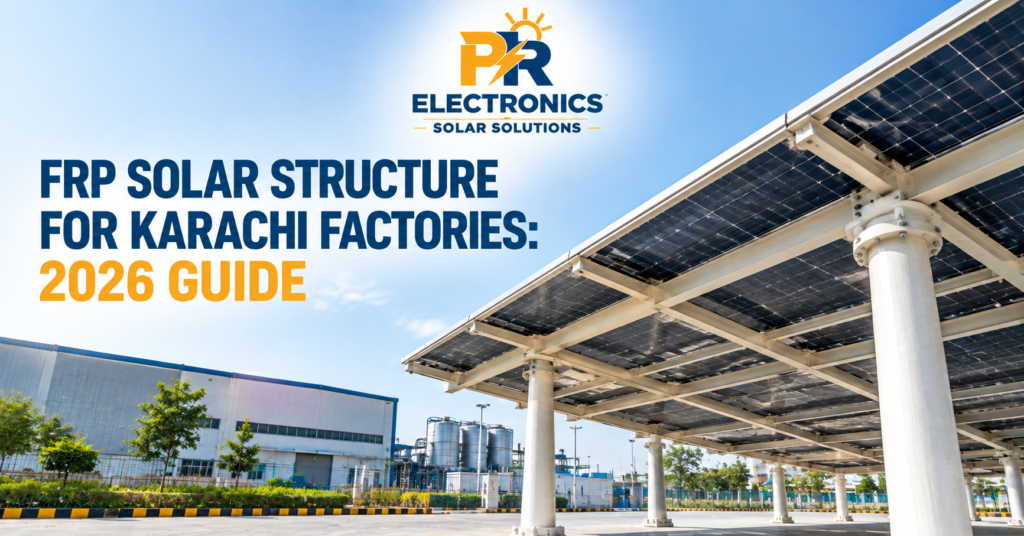
Karachi’s factories are increasingly turning to rooftop solar to control electricity costs and improve energy reliability. But when an industrial solar system covers a large roof, the panels are only one part of the investment. The structure underneath them must handle years of heat, humidity, dust, wind and outdoor exposure.
That makes an FRP Solar Structure for Karachi Factories worth considering for industrial projects where corrosion resistance, electrical insulation and long-term durability matter.
The global solar market is expanding at an extraordinary pace. According to the International Renewable Energy Agency (IRENA), 511 GW of solar capacity was added globally in 2025, representing around 75% of total renewable capacity additions that year. This rapid expansion is also increasing attention on the infrastructure supporting solar installations.
Table of Contents
Why Factory Rooftops Need Better Structural Planning
A factory roof is not the same as a residential rooftop. Industrial buildings can have larger roof spans, equipment areas, ventilation systems, water tanks, maintenance zones and different structural load limitations.
An FRP Industrial Solar Structure Karachi project therefore needs to begin with the actual site rather than simply selecting a frame from a catalogue.
The first step should be a proper site assessment. Roof dimensions, existing structures, panel layout, access routes, wind exposure and mounting requirements should be considered before installation.
The U.S. Department of Energy notes that PV arrays require stable and durable mounting structures capable of dealing with environmental forces including wind, rain and corrosion over long operating periods.
Why FRP Makes Sense in Karachi
Karachi’s coastal environment creates an important material-selection issue.
Moisture and salt-laden air can accelerate corrosion in exposed metal components, particularly where protective coatings are damaged or maintenance is neglected. The U.S. Department of Energy specifically identifies marine environments as areas where corrosion can become a significant concern for solar PV systems.
This is where an FRP Industrial Solar Structure Karachi solution can become attractive.
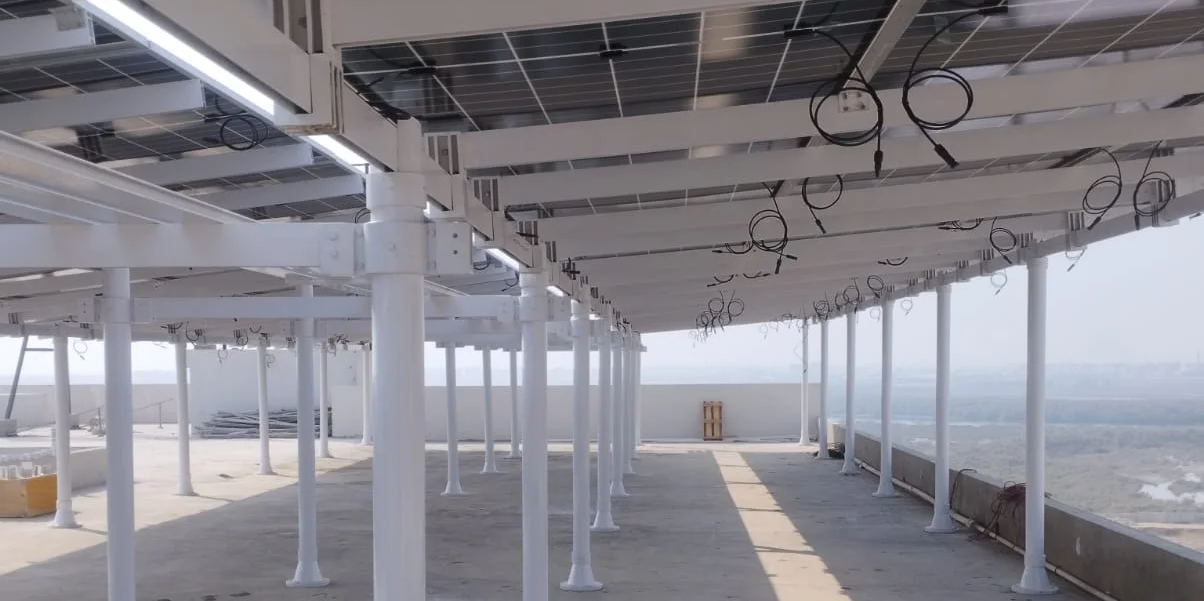
Fiber Reinforced Polymer combines reinforcing fibres with a polymer matrix. PIR Electronics describes its FRP solar structures as corrosion and rust resistant, non-conductive and designed for long-term outdoor applications.
That does not mean every FRP design is automatically suitable for every factory. Profile dimensions, connections, anchoring, bracing and installation quality still determine structural performance.
Corrosion Should Be Considered Before Installation
One of the biggest mistakes in industrial solar planning is looking only at the initial structure price.
A cheaper frame can become expensive if it requires repeated corrosion treatment, replacement of damaged components or additional maintenance.
A Corrosion Resistant Solar Structure Karachi solution changes the conversation from initial purchase price to lifecycle value.
This is particularly relevant for factories exposed to humidity, industrial pollutants or coastal air. The Department of Energy explains that corrosion can affect racking systems, fasteners, electrical equipment and other solar components, with heat and moisture potentially accelerating the process.
For this reason, a Corrosion Resistant Solar Structure Karachi project should consider not only the main profiles but also fasteners, brackets and connection points.
Weight Matters on Large Factory Roofs
Industrial rooftops can already carry HVAC equipment, ducts, water tanks, piping and other infrastructure.
Adding a solar array introduces another permanent load. Therefore, structural planning should consider the complete installation rather than looking at panel weight alone.
An FRP Industrial Solar Structure Karachi solution can be useful where lower structural weight is an important design consideration. FRP is known for its high strength-to-weight characteristics, while PIR Electronics specifically positions its solar structures as very lightweight.
However, lightweight should never mean under-designed. The final structure must still be engineered for the expected loads and site conditions.
Wind and Connection Design Cannot Be Ignored
Karachi’s open rooftops can experience strong wind exposure. Solar panels effectively create a large surface area, making the racking system and its connections important parts of the installation.
The Department of Energy recommends properly rated racking, adequate bracing and attention to critical fastened joints when designing PV systems for high-wind conditions.
Therefore, a Solar Mounting Structure Karachi project should be evaluated as a complete structural system.
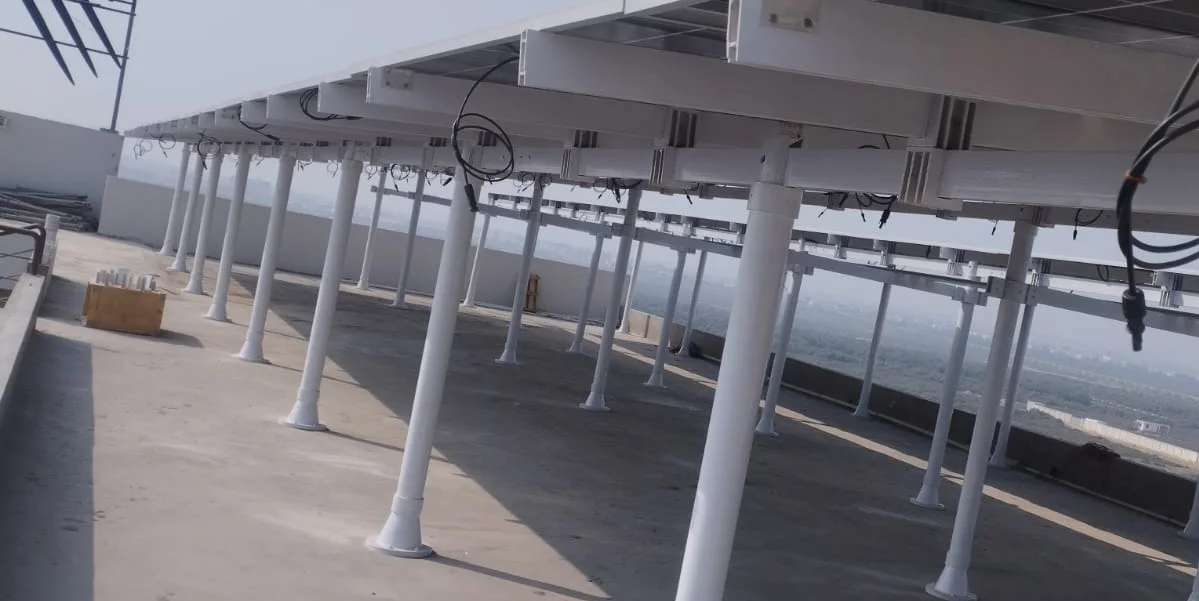
Bracing, anchors, fasteners and connection details should match the actual roof and environmental conditions. Simply choosing a material without considering the complete load path can create unnecessary risk.
Where FRP Can Benefit Karachi Factories
An FRP Solar Structure for Karachi Factories can be considered for several industrial applications.
Manufacturing Facilities
Factories with large rooftops can use solar arrays to utilise otherwise unused roof space. An FRP structure can provide a corrosion-resistant support option where environmental exposure is a concern.
Warehouses
Warehouses often have broad roof areas suitable for solar installations. Here, an FRP Industrial Solar Structure Karachi solution may be considered where lightweight construction and corrosion resistance are priorities.
Coastal Industrial Sites
Facilities closer to Karachi’s coastline may face greater exposure to humid, salt-bearing air. A Corrosion Resistant Solar Structure Karachi approach can help address one of the material challenges associated with such environments.
Choosing the Right Solar Structure
The best Solar Mounting Structure Karachi is not necessarily the cheapest or the lightest option.
Factory owners should ask several practical questions before approving a design:
- What environmental conditions will the structure face?
- What is the roof’s existing condition?
- How will wind loads be managed?
- What type of connections and fasteners will be used?
- How will future inspection and maintenance be handled?
- Is the structure designed specifically for the proposed panel arrangement?
These questions help shift the decision from product selection to proper project planning.
Why Site Assessment Comes First
For an FRP Solar Structure for Karachi Factories, the structure should be selected after understanding the site.
PIR Electronics provides site surveys, feasibility assessment, structure installation and panel mounting. This approach allows the project requirements to be considered before the structure is installed.
A proper site survey can identify roof obstacles, access restrictions, equipment locations and other practical issues that may affect the final solar layout.
For factories considering an FRP Industrial Solar Structure Karachi project, this planning stage can prevent avoidable installation complications later.
The Long-Term View
Solar panels are generally viewed as long-term assets, so the structure supporting them deserves the same level of attention.
An FRP Solar Structure for Karachi Factories can be a practical option where corrosion resistance, low weight and electrical non-conductivity are valuable characteristics.
At the same time, no material should be selected on marketing claims alone. A Corrosion Resistant Solar Structure Karachi solution still requires appropriate design, connections, installation and inspection.
For industrial buyers, the objective should be straightforward: select a Solar Mounting Structure Karachi solution that matches the roof, environment, wind conditions and expected service life of the solar project.
As global solar deployment continues to accelerate, better structural decisions will become increasingly important. Choosing the right supporting system today can help factories protect a much larger solar investment tomorrow.
For a factory-specific assessment, PIR Electronics can evaluate the site requirements and recommend an FRP-based solar mounting approach according to the project.
FAQs
Is FRP suitable for factory solar structures in Karachi?
FRP can be suitable for factory solar applications where corrosion resistance, low weight and electrical non-conductivity are important. The structure should still be properly designed for the specific roof and loads.
Why is corrosion important for Karachi factory rooftops?
Karachi’s humidity, coastal air and industrial environment can increase exposure to conditions that contribute to corrosion. Material selection and connection design should therefore be considered before installation.
Is an FRP structure suitable for large industrial solar systems?
FRP can be considered for commercial and industrial solar projects, but suitability depends on profile design, structural loads, bracing, connections, anchoring and the specific installation environment.
What should factories check before installing a solar structure?
Factories should assess roof condition, structural capacity, panel layout, wind exposure, access, drainage, equipment locations and the materials used for the structure and its connections.