

FRP solar structures are engineered systems, not simply replacement pieces for metal mounting. Their performance depends on the profile’s shape, dimensions, straightness and consistency. That makes FRP Dimensional Accuracy Karachi an important consideration when specifying composite solar structures.
Recent research has examined dimensional variation in pultruded GFRP profiles using precise 3D measurement techniques. Researchers found that manufacturing-induced geometric deviations can vary between profile types, highlighting the importance of dimensional control for structural reliability.
Table of Contents
Why Profile Dimensions Matter
Every FRP profile has a designed cross-section. Small differences in wall thickness, flange dimensions, angles or straightness can influence how that profile behaves when installed.
This makes FRP Profile Tolerance Karachi more than a manufacturing detail.
For solar structures, profiles must connect correctly, maintain their intended geometry and transfer loads through the designed structural path. Consistent dimensions also make installation more predictable.
A reliable FRP Dimensional Accuracy Karachi process therefore begins before the profile reaches the rooftop.
What Profile Tolerance Actually Means
FRP Profile Tolerance Karachi refers to the acceptable dimensional variation around the specified profile geometry.
A manufactured profile will not necessarily measure exactly the same at every point. Engineering specifications therefore establish acceptable limits for dimensions such as width, thickness, length and angular geometry.
These limits matter because excessive variation can create installation difficulties or alter the expected structural behaviour.
For FRP Geometry Control Karachi, manufacturers need appropriate measurement procedures rather than relying only on visual inspection.
Geometry Control in Pultruded Profiles
Pultrusion produces continuous composite profiles by pulling reinforcement and resin through a forming and curing process.
The process can create highly repeatable sections, but manufacturing variables can still influence final geometry.
The 2025 study of pultruded GFRP profiles used a coordinate-measuring machine to examine geometric variability across different open-section profiles. The research specifically connected dimensional measurement with reliability assessment.
That makes Pultruded FRP Quality Karachi an increasingly relevant specification issue.
Quality is not only about whether the profile looks intact. It also involves whether its manufactured geometry remains within the required engineering tolerance.
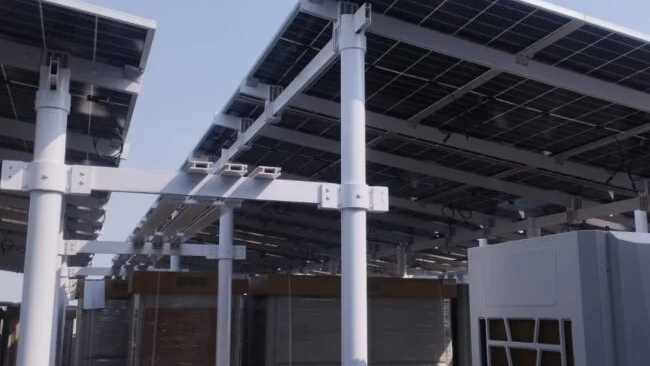
How Dimensional Accuracy Supports Solar Installation
A solar structure relies on multiple profiles working together.
If a profile has inconsistent dimensions, installers may encounter difficulties when positioning brackets, aligning members or maintaining the intended geometry.
Good FRP Geometry Control Karachi helps reduce these uncertainties.
Likewise, FRP Profile Tolerance Karachi provides a measurable basis for checking whether manufactured profiles meet the required specification.
This becomes particularly important when a project uses repeated structural members across a large rooftop.
What Should Be Checked?
A professional Pultruded FRP Quality Karachi programme can examine several characteristics.
Cross-Section
Width, height and wall thickness should correspond with the specified profile.
Straightness
Long profiles should remain within the permitted straightness tolerance so that installation does not introduce unnecessary adjustment.
Angles
For structural sections with flanges or angled geometry, dimensional consistency can affect connection and assembly accuracy.
Surface Condition
Visible manufacturing defects can also provide useful information during quality inspection, although visual inspection should complement rather than replace dimensional measurement.
These checks contribute directly to FRP Dimensional Accuracy Karachi.
Why Measurement Is Becoming More Technical
Traditional inspection may rely heavily on basic gauges and visual checks. Modern composite manufacturing is increasingly using precision measurement to understand geometric variation.
The research behind FRP Geometry Control Karachi demonstrates this shift. A coordinate-measuring machine was used to obtain detailed measurements from pultruded GFRP specimens, providing data that can support statistical assessment of manufacturing variation.
For manufacturers and buyers, this means Pultruded FRP Quality Karachi can be evaluated using measurable characteristics rather than appearance alone.
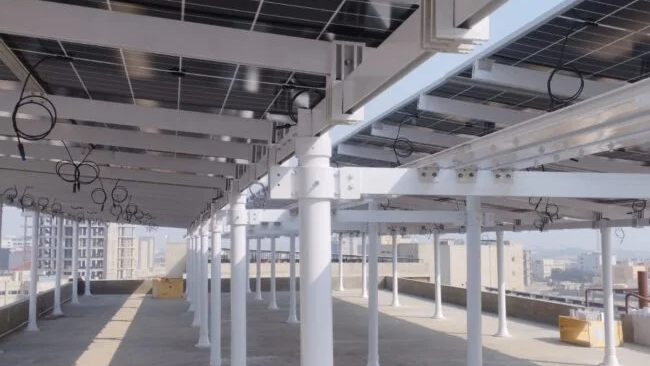
What This Means for Karachi Solar Projects
Solar structures need predictable installation and repeatable structural geometry.
That makes FRP Profile Tolerance Karachi worth considering during procurement, especially where many identical profiles are required.
PIR Electronics supplies FRP-based solar structure solutions, making dimensional specification and manufacturing consistency relevant parts of the discussion when selecting composite mounting systems.
A clear specification can define required dimensions, tolerances, inspection methods and acceptance criteria before production.
That approach strengthens FRP Dimensional Accuracy Karachi from the beginning of the project.
FAQs
What is FRP dimensional accuracy?
FRP Dimensional Accuracy Karachi refers to how closely a manufactured FRP profile matches its specified dimensions and geometric requirements.
Why are FRP profile tolerances important?
FRP Profile Tolerance Karachi helps ensure profiles can be assembled consistently and perform according to the intended structural design.
How is FRP geometry controlled?
FRP Geometry Control Karachi can involve dimensional gauges, precision measurement equipment, profile inspection and documented manufacturing tolerances.
What does pultruded FRP quality include?
Pultruded FRP Quality Karachi includes dimensional consistency, profile geometry, surface condition and compliance with the specified manufacturing requirements.