
Solar structures are increasingly moving toward purpose-built composite profiles rather than treating FRP as a simple substitute for conventional materials. In 2026, pultrusion technology is expanding into solar applications because manufacturers can produce profiles in different geometries, wall configurations and reinforcement arrangements.
This makes FRP Profile Engineering Karachi an important part of developing dependable solar structures.
Table of Contents
Why Profile Engineering Matters
An FRP structure is only as practical as the profiles forming its framework.
FRP Structural Profiles Karachi can be produced as channels, tubes, angles, beams and other cross-sections. The geometry determines how different members fit together and how efficiently the material can be used.
Modern pultrusion allows manufacturers to create profiles with customised geometries and even complex hollow sections. Fraunhofer IWU notes that pultruded profiles can be produced with different wall thicknesses and configurations for applications including solar systems.
That flexibility gives FRP Profile Engineering Karachi a much broader role than simply selecting a standard FRP section.
The Growth of Pultruded FRP Profiles
The market is increasingly moving toward engineered composite profiles for structural applications.
Recent research has examined dimensional deviations and geometrical characteristics in pultruded GFRP profiles, showing why profile geometry deserves attention when composite members are manufactured for structural applications.
For FRP Pultruded Profiles Karachi, this means manufacturers can focus on producing profiles suited to the intended structure instead of relying exclusively on generic shapes.
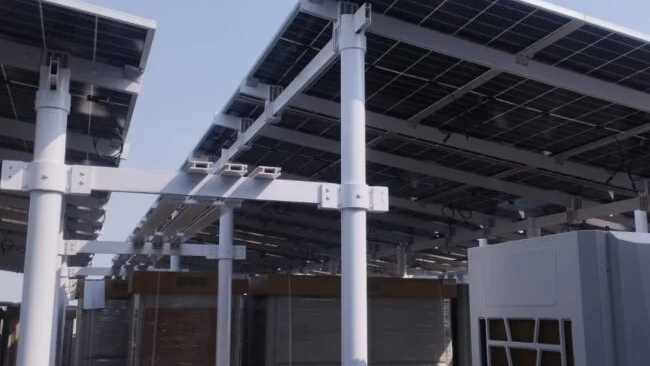
The same principle applies to FRP Solar Mounting Profiles Karachi. Profile dimensions, section shape and reinforcement arrangement can be selected around the actual mounting system.
Custom Profiles for Solar Structures
One advantage of FRP Structural Profiles Karachi is the ability to use different cross-sections within one structural system.
A solar structure may require a deeper section in one location and a compact profile in another. Instead of forcing one profile across the entire assembly, engineered FRP systems can use different sections where appropriate.
This is where FRP Profile Engineering Karachi becomes valuable.
The objective is not simply to make a profile. It is to create a profile that integrates properly with the rest of the FRP structure.
Why Pultrusion Is Becoming More Relevant
Pultrusion is a continuous manufacturing process in which fibres are impregnated with resin and pulled through a heated die to form a finished composite profile.
Its automated nature supports repeatable production of long sections. Fraunhofer reports that modern pultrusion can produce complex cross-sectional geometries and is being explored for new applications including renewable-energy systems.
For FRP Pultruded Profiles Karachi, this manufacturing approach can support projects requiring consistent sections across multiple structural members.
It also creates opportunities for specialised FRP Solar Mounting Profiles Karachi rather than relying only on conventional metal-profile dimensions.
Precision Is Part of the Structure
Profile engineering does not end when a section leaves the production line.
Recent research into pultruded GFRP profiles has measured dimensional deviations and geometrical imperfections using high-accuracy 3D measurement. The research demonstrates that manufactured profiles can contain measurable variations in dimensions and geometry.
That makes dimensional control relevant to FRP Structural Profiles Karachi.
Consistent profile geometry helps different members align correctly during fabrication and installation. For solar structures containing repeated members, this becomes especially useful because small inconsistencies can become more noticeable across a larger assembly.
Building Better FRP Solar Structures
The growing use of engineered profiles is changing how composite structures are approached.
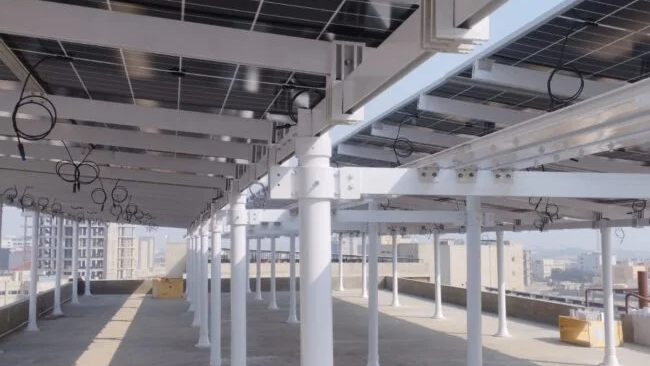
FRP Solar Mounting Profiles Karachi can be selected around the actual configuration of the solar structure, while FRP Pultruded Profiles Karachi provide a practical manufacturing route for producing continuous composite sections.
For projects requiring specialist composite structures, PIR Electronics can help businesses explore FRP-based solar structure solutions suited to their installation requirements.
The broader trend is clear: FRP Profile Engineering Karachi is moving toward more specialised, application-specific profile solutions rather than one-profile-fits-all construction.
FAQs
What is FRP profile engineering?
FRP Profile Engineering Karachi involves developing or selecting composite profile shapes, dimensions and configurations for a specific structural application.
Why are pultruded profiles used for FRP structures?
FRP Pultruded Profiles Karachi can be continuously manufactured into long structural sections with controlled cross-sectional geometry, making them suitable for many structural applications.
What are FRP structural profiles?
FRP Structural Profiles Karachi are composite sections such as tubes, channels, angles and beams used to create FRP structural assemblies.
Can FRP profiles be customised for solar structures?
Yes. FRP Solar Mounting Profiles Karachi can be developed around the geometry and configuration required for a particular solar structure rather than relying exclusively on standard sections.