
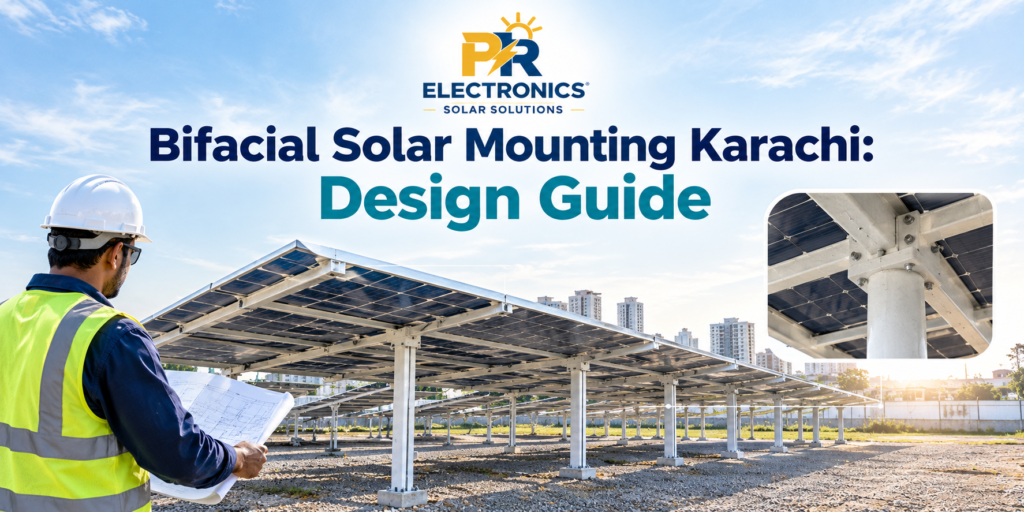
Solar panel selection is changing as more projects explore bifacial modules that can capture sunlight from both the front and rear surfaces. However, installing these panels requires more than choosing the right module. The mounting structure also influences how much light reaches the rear side.
For projects considering Bifacial Solar Mounting Karachi, structure geometry deserves attention from the planning stage. Panel height, support placement, rear clearance and the surface beneath the array can all affect the potential benefit of bifacial technology.
According to the International Energy Agency, solar photovoltaic technology continues to expand across global energy markets. As module technology evolves, mounting systems must accommodate different panel designs and installation requirements.
Table of Contents
Why Bifacial Panels Need a Different Mounting Approach
Conventional solar panels primarily generate electricity from light reaching their front surface. Bifacial modules can also convert suitable light reaching their rear surface, including reflected sunlight.
This makes Bifacial FRP Structure Karachi a relevant consideration for installations where the mounting design can preserve access to rear-side light.
A structure that sits too close to an obstructive surface or places broad supports behind active cell areas may reduce the light available to the rear of the module. The actual effect depends on module design, ground reflectivity, surrounding obstacles and installation conditions.
For Bifacial Solar Mounting Karachi, the objective is to design a practical support system without unnecessarily obstructing the rear surface.
How Rear Clearance Influences Energy Capture
Rear clearance refers to the available space between the back of a solar module and the surface or components beneath it. That space affects how reflected and scattered light reaches the rear cells.
Solar Panel Rear Clearance Karachi should therefore be considered during the initial layout rather than after the structure has been fabricated.
Greater clearance does not automatically guarantee higher output. The benefit depends on the site’s conditions, including the reflective properties of the surface, panel spacing, shading and the module’s electrical characteristics.
The National Renewable Energy Laboratory provides research and technical resources on photovoltaic performance and system design. These resources can help project planners understand why module technology and installation conditions must be evaluated together.
For Bifacial Panel Installation Karachi, a site-specific assessment is more useful than applying one universal mounting height to every project.
Choosing an FRP Structure for Bifacial Modules
FRP, or fibre-reinforced polymer, combines reinforcing fibres with a polymer matrix. Depending on the profile design and material specification, it can offer corrosion resistance and electrical non-conductivity.
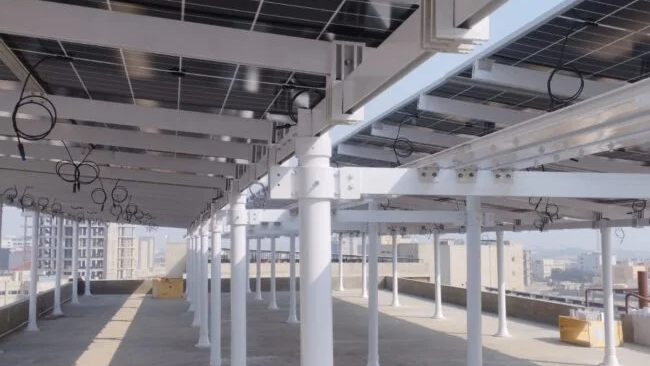
A properly specified Bifacial FRP Structure Karachi design should consider the module dimensions, approved support points, required clearances and the complete structural arrangement.
FRP profiles must be selected for the intended application. Their dimensions, stiffness, connections and support spacing should follow appropriate engineering calculations rather than assumptions based solely on material type.
For Bifacial Solar Mounting Karachi, the structure should provide stable panel support while leaving the rear surface as unobstructed as the design reasonably allows.
Installation Details That Deserve Attention
Successful Bifacial Panel Installation Karachi begins with accurate site measurements and a mounting plan that reflects the selected module manufacturer’s requirements.
Installers should confirm the intended panel orientation, spacing, support positions and cable routing before fixing the structure in place. Electrical connectors and cables should not create unnecessary shading or interfere with access for inspection.
The surface beneath the array also matters. A darker surface may reflect less light than a lighter, more reflective one, although actual results depend on material properties and changing outdoor conditions.
For Solar Panel Rear Clearance Karachi, planners should assess the existing roof or ground surface instead of assuming that all installations will receive the same rear-side irradiance.
Why Project-Specific Planning Matters in Karachi
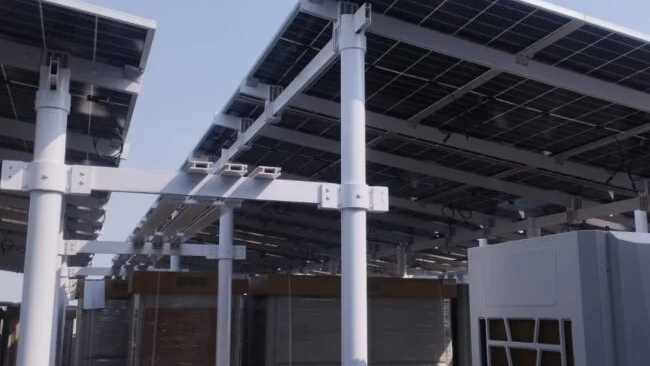
Karachi properties differ considerably in available space, roof configuration, surrounding obstructions and installation access. A design suitable for an open commercial site may not work equally well on a crowded residential roof.
A professional Bifacial FRP Structure Karachi assessment should identify the available installation area, access requirements, panel arrangement and structural constraints before finalising the design.
PIR Electronics specialises in FRP solar mounting structures. Through PIR Electronics, project owners can explore structure options and discuss the mounting requirements of their proposed solar installation.
The important point is to coordinate module selection and mounting design from the beginning. Changing the structure after installation can introduce avoidable costs and disruption.
Building a Better Bifacial Solar Installation
Bifacial technology creates an opportunity to capture additional sunlight, but the results depend on the complete installation rather than the module alone.
A considered Bifacial Solar Mounting Karachi plan accounts for rear clearance, surface reflectivity, shading, support placement and manufacturer requirements. Likewise, Bifacial Panel Installation Karachi should preserve appropriate access for cleaning, inspection and future servicing.
By evaluating these details before installation, project owners can make more informed decisions about their mounting systems and the realistic benefits of bifacial modules.
FAQs
What is bifacial solar mounting?
Bifacial solar mounting supports modules that can generate electricity from both their front and rear surfaces. Its design should accommodate module specifications and allow suitable light to reach the rear side.
Does rear clearance improve bifacial solar performance?
Suitable clearance can improve rear-side light access, but the benefit depends on factors such as surface reflectivity, shading, panel spacing and installation geometry.
Can FRP structures support bifacial solar panels?
FRP profiles may be suitable when their dimensions, material specifications and structural capacity meet the project’s engineering requirements and the module manufacturer’s mounting instructions.
What should installers check before fitting bifacial panels in Karachi?
Installers should assess the roof or ground surface, module dimensions, rear clearance, support locations, shading, cable routing and access for future maintenance before finalising the installation.