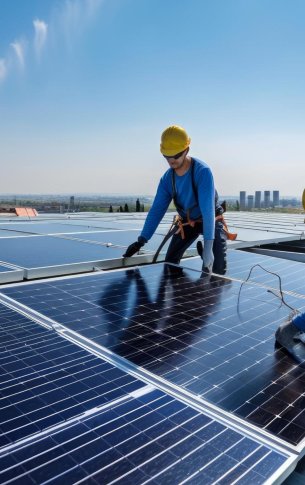
The weather in Karachi is one of the most difficult when it comes to solar infrastructure. The hot climate of summer, the high concentration of sunlight, the humidity of the shore and the salinity of the air of the area place conventional metal cases of solar mounting structures in terms of long-term performance problems. Fibre solar structures are better and future-proof at this point. Fibre-based structures should be used in harsh environments; they must be designed to be durable, stable, and efficient, which is precisely what the city of Karachi requires due to the climatic challenges.
Climate of Karachi: The Solar Structures Tested
Karachi is usually hot with temperatures of over 40 °C and constant humidity since the area is coastal. These environmental conditions play a significant role in increasing the rate of corrosion and fatigue of the material and structural deformation of the conventional steel or aluminium frames.
Key challenges include:
- Constant exposure to intense UV-radiation.
- Very humid, causing rust and oxidation.
- Eroding of metals due to salty air blowing along the coast.
- Weather conditions that lead to sudden shifts in weather that affect the stability of the structure.
In order to work effectively in such an environment, solar structures should be designed with materials that can withstand heat stress and moisture without corrosion.
What Makes Fibre Solar Structures Unique
The construction of fibre solar structures is done with high-performance resins that are reinforced with fibreglass to enhance the manufacture of high-performance composite materials used in the construction. These materials are non-corrosive, lightweight and thermally stable, unlike metal and are therefore very useful in the coastal and high temperature areas.
PIR Electronics plans the fibre solar structures to meet the demanding conditions, such as Karachi, in the long-term durability and structural strength, as well as the yearly stability of the panel position.
High Thermal Stability and Heat Resistance
The first point to be considered is the fact that fibre solar structures can withstand high temperatures without warping or overstretching. Stainless steel types are more prone to expansion at very high temperatures, leading to the loosening of the fasteners and the angle of solar panels.
Fibre structures provide:
- Less thermo-expanding to keep panels at constant orientation.
- Thermal stress resistance and cracking resistance.
- Constant performance under the summer sun.
This thermal stability will guarantee that the solar panels are positioned at an optimum level so that they produce maximum energy even in the hottest time of the year in Karachi.
Consistent Operation in a humid climate and Sea air.
Significant components of corrosion in traditional mounting systems are humidity and air with salty content. Rust also eventually destroys metal and can lead to higher maintenance expenses and shorter system life.
The fibre solar structures are, by nature, moisture and saline-resistant, and they provide:
- Full resistance to rust and oxidation.
- Long-term structural power in the coastal areas.
- Minimal maintenance is needed.
PIR Electronics further develops this resistance through the specially designed protective resins and high-precision manufacturing.
UV Strength and Strength over Time of Material
Low-quality materials will be damaged by being in constant sunlight. The Fibre solar structures are machine-designed with anti-UV colour, which avoids discolouration and surface damage along with brittleness.
This results in:
- Long-term mechanical durability under conditions of prolonged sun exposure.
- UV-resistant material deterioration.
- The presence of a longer operating life than conventional options.
Load-Bearing High-Capacity and Lightweight
Although fibre solar structures are lightweight, they have tremendous load-bearing capacity. This predisposes them to be used in rooftops, industrial developments and ground-mounts without overstraining foundations.
Key advantages include:
- Less cumbersome and quicker installation.
- Less structural loading on structures.
- Enhanced safety in both powerful winds and earthquakes.
PIR Electronics makes sure that every single structure is of high performance and safety.
Low Maintenance and Economy in the Long Run
The harsh environment in Karachi may make frequent maintenance expensive. In comparison to metal structures that have to be repaired and repainted every few months, fibre solar structures are not maintained.
Benefits include:
- Reduce maintenance costs in the long-term.
- Reduced system downtime
- Long-term better ROI.
Conclusion
The heat and humidity, combined with the coastal climate of Karachi, demand solar constructions beyond traditional materials. As a durable, corrosion-resistant, stable thermal structure, fibre solar structures are developed to withstand high-stress conditions. These structures can be used with advanced engineering and have UV protection as well as need minimal maintenance, which will help in the consistency of solar functioning in the future. PIR Electronics supports reliable and sustained solar installations by providing climate-adjusted fibre solar solutions because they will endure in the most challenging climate in Karachi.