
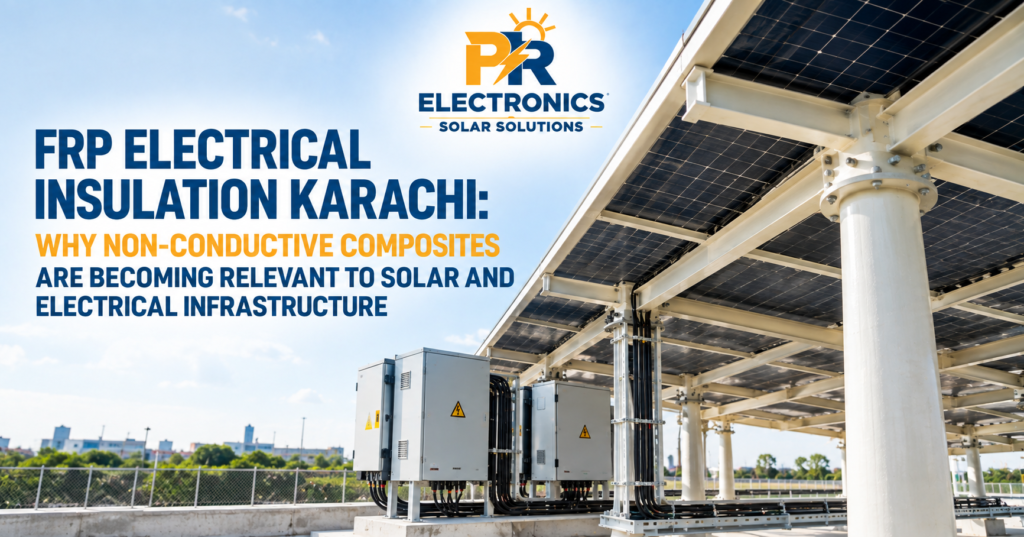
Karachi’s infrastructure is becoming increasingly dependent on distributed electricity systems, rooftop solar, electrical equipment and outdoor installations. As these systems expand, material selection is no longer only about structural strength. Electrical behaviour, heat transfer, moisture exposure and long-term environmental performance are also becoming engineering considerations.
This is where FRP Electrical Insulation Karachi becomes an increasingly relevant technical subject.
Fiber Reinforced Polymer is not simply a lighter alternative to steel. Depending on the reinforcement and resin system, FRP can provide electrical insulation while also offering corrosion resistance and relatively low thermal conductivity. The combination is particularly interesting where structural components operate close to electrical equipment.
The importance is growing with Pakistan’s rapid solar expansion. Pakistan added roughly 10 GW of solar PV in 2025, driven largely by distributed systems.
As more electrical and solar infrastructure moves into rooftops, commercial properties and outdoor environments, the supporting materials deserve closer technical consideration.
Table of Contents
Why Electrical Insulation Matters in Structural Components
In many projects, electrical safety is considered only when cables, switchgear and protection devices are selected.
However, the surrounding structure can also influence safety.
Metallic supports are electrically conductive. If a component comes into unintended contact with an energised conductor, it can create an electrical hazard.
By contrast, properly specified FRP can provide a non-conductive structural element. IEEE notes that glass- and aramid-fibre composites combined with dielectric resins can serve as structural electrical insulators in high-voltage equipment.
This is one reason FRP Non Conductive Karachi applications deserve attention in environments where structural components are positioned close to electrical systems.
The material does not replace electrical protection, grounding or isolation requirements. Instead, it can add another layer of material-level control when appropriately specified.
What Makes FRP Electrically Different?
FRP is a composite rather than a single material.
Its properties depend on the reinforcement, resin chemistry, fibre orientation, manufacturing method and final geometry.
For FRP Composite Insulation Karachi, this distinction is critical.
Glass-fibre-reinforced polymer, for example, can combine glass fibres with a thermoset resin matrix. Both the fibre and matrix contribute to the material’s electrical behaviour, although the final insulation performance depends on the specific formulation.
This means that simply specifying “FRP” is not technically sufficient.
Engineers should identify the product grade, electrical requirements, operating temperature and environmental exposure relevant to the installation.
Why Karachi Creates a Different Material Challenge
Karachi combines several environmental conditions that can influence outdoor electrical infrastructure.
Heat is one consideration.
Humidity is another.
Coastal areas also introduce salt-laden air, while industrial districts can expose materials to pollutants and chemically active atmospheres.
These factors make FRP Electrical Insulation Karachi relevant beyond purely theoretical electrical protection.
Corrosion is particularly important because metallic supports can deteriorate when protective coatings are damaged or environmental exposure becomes aggressive.
FRP does not corrode through the same electrochemical mechanism as conventional steel. Research into GFRP exposed to saline environments has demonstrated significant durability potential, while also showing that composite performance depends on material type and exposure conditions.
That combination of insulation and environmental resistance makes FRP worth considering for selected Karachi applications.
Solar Structures Are a Practical Example
Solar installations contain several electrically active components operating outdoors for years.
Panels generate DC electricity, while cables, connectors and inverters form part of the electrical system.
In this environment, FRP Electrical Safety Karachi can become relevant where the structure supporting or surrounding the equipment needs electrical non-conductivity.
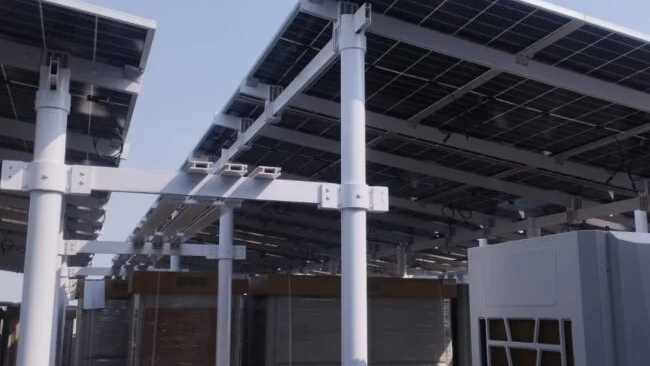
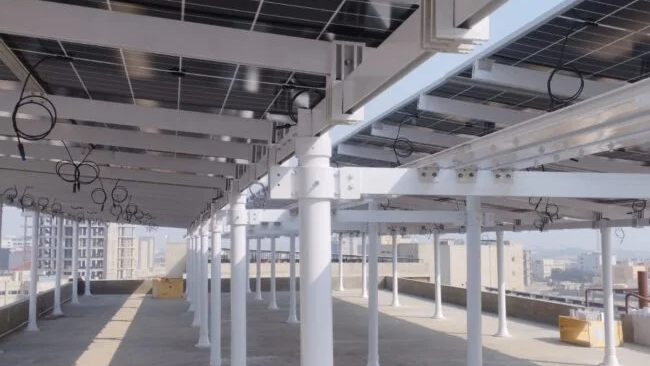
PIR Electronics publishes FRP solar structures with non-conductive electrical and thermal characteristics and identifies corrosion resistance as one of the material’s advantages.
However, a non-conductive structure should never be interpreted as making a solar installation electrically safe by itself.
Electrical protection remains dependent on the complete system design, including isolation, protection devices, wiring, connectors and applicable standards.
The value of FRP is that its inherent material characteristics can complement that overall design.
Where FRP Can Make Engineering Sense
The strongest case for FRP Non Conductive Karachi applications is not that every electrical structure should be replaced with composite material.
Instead, FRP becomes useful where several requirements overlap.
An installation may need corrosion resistance.
It may need electrical insulation.
It may operate outdoors.
It may require a relatively lightweight structural element.
It may also be difficult or expensive to maintain conventional metal structures.
When multiple requirements exist simultaneously, composite materials can become more attractive than when only one property is required.
Electrical Infrastructure Requires More Than Non-Conductivity
A common mistake is assuming that non-conductivity automatically means suitability.
It does not.
FRP Electrical Safety Karachi also depends on mechanical strength, temperature limits, UV exposure, moisture behaviour, connection details and installation quality.
The material must remain mechanically stable under the expected loading while maintaining the required electrical characteristics throughout its service life.
This is particularly relevant for outdoor applications, where UV and temperature can affect polymers over time.
Therefore, technical selection should consider both electrical and mechanical performance rather than choosing FRP solely because it is non-conductive.
The Importance of Temperature
Karachi’s high summer temperatures create another engineering consideration.
PIR Electronics states a 60–70°C stability temperature range for its FRP solar structures. That is a product-specific published specification and should not be treated as a universal temperature limit for all FRP composites.
For FRP Composite Insulation Karachi, operating temperature should therefore be evaluated against the actual resin system and application.
Electrical insulation characteristics and mechanical behaviour may change with temperature, especially when a polymer approaches important thermal transition ranges.
A serious specification should consequently consider the maximum expected service temperature rather than relying only on average ambient conditions.
Why Coastal Applications Deserve Attention
The relationship between corrosion and electrical safety becomes particularly important near Karachi’s coastal environment.
Metal structures can require periodic coating inspection, repair and corrosion management. When corrosion affects a support close to electrical equipment, it can become more than a cosmetic maintenance issue.
An appropriately specified FRP Electrical Insulation Karachi solution can avoid conventional steel rusting while also providing non-conductive structural characteristics.
Research on FRP durability in seawater-related environments nevertheless shows that composites should not be described as completely unaffected by every environmental mechanism. Moisture absorption, fibre type, resin system and surface protection still influence long-term performance.
That is why engineering specification remains more important than broad material claims.
What Engineers Should Ask Before Selecting FRP
For FRP Non Conductive Karachi projects, procurement teams should request more than a basic product description.
They should establish the required electrical insulation characteristics, operating temperature, mechanical loading, UV exposure, moisture conditions and connection requirements.
The intended application also matters.
A solar support profile does not necessarily have the same requirements as an electrical enclosure or high-voltage insulating component.
The right FRP grade is therefore application-specific.
This approach makes FRP Composite Insulation Karachi a design decision rather than a generic material substitution.
The Role of PIR Electronics
PIR Electronics focuses on FRP-based solar structural solutions and publishes electrical non-conductivity, thermal non-conductivity, corrosion resistance and lightweight construction among its product characteristics.
For Karachi projects, PIR Electronics can assess the intended solar application and recommend an FRP structural approach according to the site’s requirements.
The key is to evaluate the complete environment rather than choosing a composite profile simply because it is labelled FRP.
A More Technical Way to Think About FRP
The growing interest in FRP Electrical Safety Karachi is part of a wider movement toward material systems that solve multiple engineering problems simultaneously.
A conventional metal component may provide the required strength but introduce conductivity and corrosion concerns.
An appropriately engineered FRP component can combine structural support, non-conductivity and resistance to conventional corrosion.
That does not make FRP universally superior.
It makes it particularly interesting for applications where these properties are required together.
For Karachi’s growing solar and electrical infrastructure, that distinction is becoming increasingly relevant.
The question is not simply whether FRP is stronger or lighter than another material.
The better question is whether its electrical, mechanical and environmental properties match the actual service conditions.
FAQs
What is FRP Electrical Insulation Karachi?
FRP Electrical Insulation Karachi refers to using appropriately specified fibre-reinforced polymer components where structural support and electrical insulation are both required in Karachi installations.
Is FRP completely non-conductive?
Many FRP systems can provide strong electrical insulation, particularly glass-fibre and appropriate resin combinations. However, insulation performance depends on the specific material formulation, manufacturing process and application.
Why is FRP useful for electrical safety in Karachi?
FRP Electrical Safety Karachi can be relevant where structural components are located near electrical equipment and where a non-conductive, corrosion-resistant material is beneficial in Karachi’s outdoor environment.
Can FRP replace metal in every electrical application?
No. FRP Composite Insulation Karachi should be specified according to the required electrical, thermal, mechanical, fire and environmental performance. Different applications require different material grades and designs.