Why Small Karachi Homes Need Better Rooftop Planning
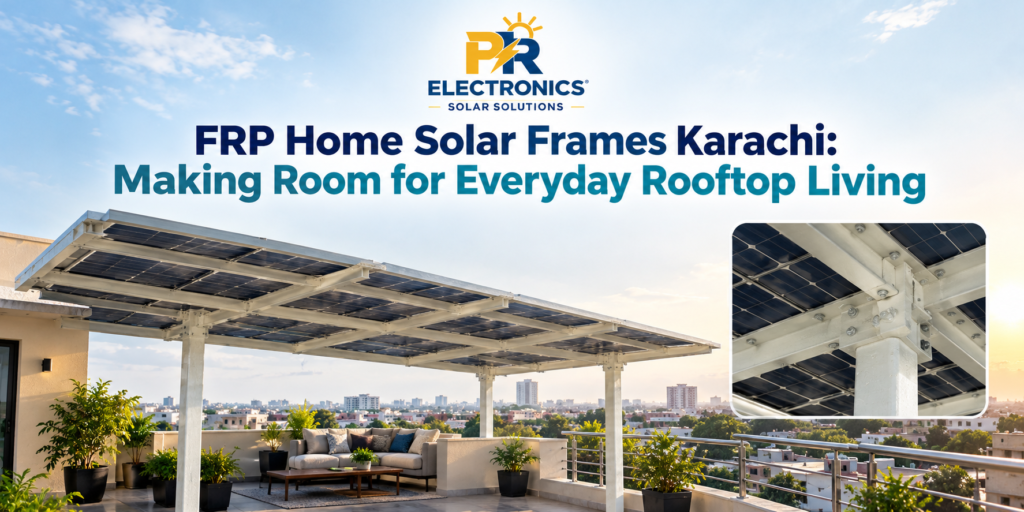
In many Karachi houses, the rooftop serves several purposes. Families dry clothes, access water tanks, maintain plumbing, and use open space for household activities. Adding solar panels can make this space harder to manage without a sensible layout. FRP Home Solar Frames Karachi projects should therefore consider how the family uses the roof, not just how many panels can fit.
Thoughtful Rooftop Laundry Space Planning helps homeowners preserve practical areas while considering their solar requirements. Instead of filling every available section, families can identify laundry routes, washing areas, tank access, and suitable panel locations before installation begins.
Table of Contents
Designing Around Laundry and Solar Requirements
A useful starting point is a measured rooftop plan. Mark the washing machine, clothes-drying area, water tank, drainage points, stair access, and other fixed features. This gives installers a clearer understanding of the available space.
Rooftop Laundry Space Planning also means considering how clotheslines and drying racks will operate after installation. Panel rows shouldn’t unnecessarily block movement or make routine cleaning difficult.
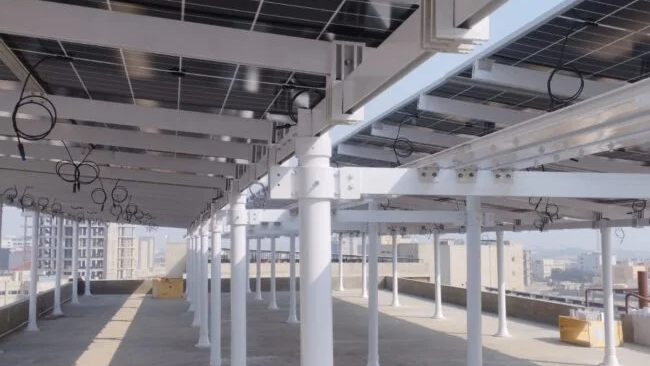
With FRP Home Solar Frames Karachi, homeowners can discuss whether a lightweight mounting arrangement suits their roof and proposed panel layout. FRP, or fibre-reinforced polymer, combines reinforcing fibres with a polymer matrix. Its suitability depends on the selected profiles, connections, spans, and engineering design.
Where Residential FRP Structures Fit
Well-designed Residential FRP Structures can be considered for suitable solar mounting applications where material weight and electrical non-conductivity matter. However, the complete assembly must still be engineered for the panels, roof conditions, and expected wind forces.
For a family home, Residential FRP Structures should be assessed alongside the practical layout. The goal is to create a stable installation without unnecessarily sacrificing access to household facilities.
The wider market also shows growing interest in composite materials. According to Grand View Research’s fibre-reinforced plastics market analysis, construction and infrastructure accounted for 33.2% of FRP market revenue in 2025. This is a global market figure, not a measurement of adoption among Karachi households.
What Homeowners Should Discuss Before Installation
Before choosing FRP Home Solar Frames Karachi, homeowners should share their roof dimensions, planned panel quantity, and everyday access requirements. An installer can then assess whether the proposed layout is practical and structurally appropriate.
Ask how the design will preserve laundry access, allow water-tank servicing, and accommodate drainage. Rooftop Laundry Space Planning should also account for safe walking routes and future maintenance.
The US Department of Energy’s solar energy resources offer useful guidance for homeowners evaluating solar installations. Local roof conditions and the actual mounting design still require individual assessment.
Choosing a Suitable FRP Structure Provider
A professional site survey can help translate household needs into an achievable layout. Discuss your available rooftop area, preferred panel arrangement, and the space your family needs to keep accessible.
For solar structure surveys, feasibility planning, and installation enquiries, contact PIR Electronics to discuss your property’s requirements.
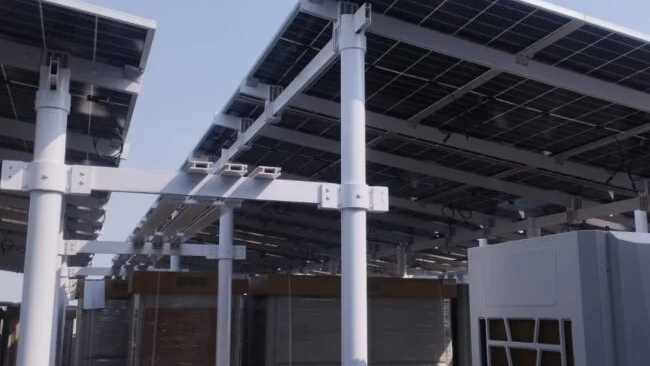
When comparing Residential FRP Structures, ask about profile specifications, connection design, support spacing, wind calculations, and installation responsibilities. A suitable design should balance solar requirements with household convenience.
Ultimately, FRP Home Solar Frames Karachi should be considered as part of a complete rooftop plan. With proper Rooftop Laundry Space Planning, families can evaluate solar installation without overlooking the everyday activities that make their home functional.
FAQs
1. Can solar panels be installed without losing laundry space?
Potentially, yes. A site survey can help identify panel positions while preserving clothes-drying areas, drainage, and access routes.
2. Are FRP structures suitable for residential solar panels?
They may be suitable when the profiles, connections, supports, and anchoring are properly engineered for the installation.
3. What should homeowners check before selecting an FRP structure?
Check the roof condition, proposed panel layout, material specifications, wind-load calculations, access requirements, and installation details.
4. How can Karachi homeowners discuss an FRP solar structure?
Contact PIR Electronics through its official website to enquire about a site survey, feasibility assessment, and solar mounting options.