Industrial solar installations are designed to operate for many years. Solar panels receive most of the attention because they generate electricity, but the structure supporting those panels is equally important.
A solar array can only perform reliably when its mounting system remains stable, secure, and capable of handling environmental conditions throughout its service life.
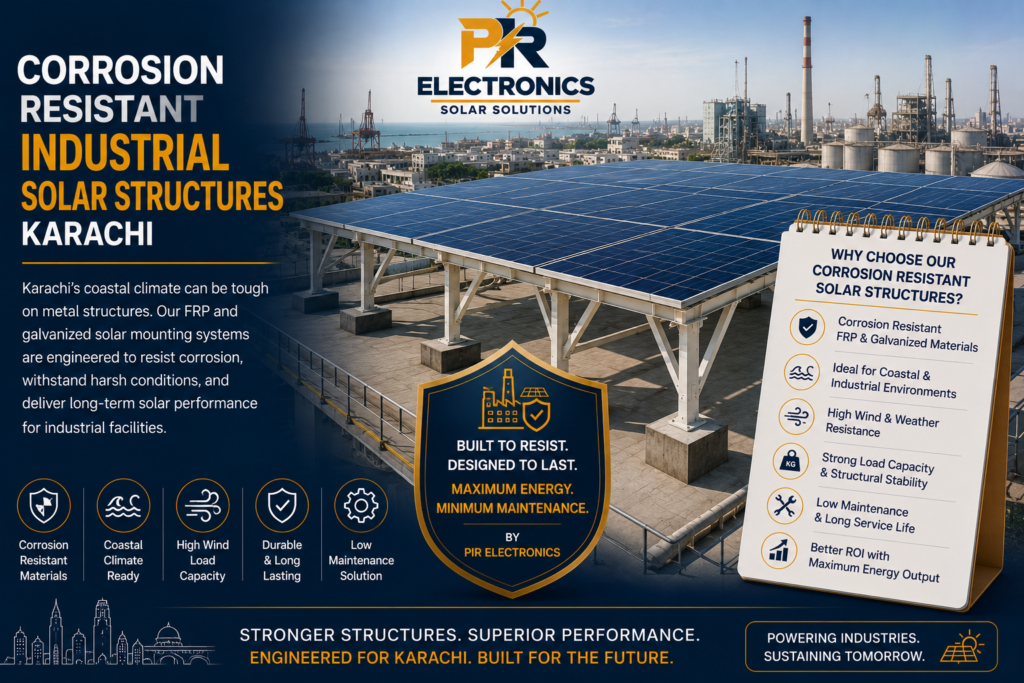
This becomes especially important for industrial solar structures Karachi projects. Industrial rooftops, warehouses, factories, processing facilities, and commercial buildings can expose mounting systems to dust, humidity, pollution, heat, and moisture. Locations closer to the coast can introduce additional environmental challenges.
Choosing a structure based only on its initial price can therefore create long-term maintenance concerns.
The better approach is to consider the complete environment, material, structural design, installation quality, and expected service life before construction begins.
Table of Contents
Why Corrosion Matters in Solar Structures
Corrosion gradually damages susceptible materials when they interact with moisture, oxygen, salts, chemicals, or other environmental factors.
For solar mounting systems, corrosion can affect:
- Structural members
- Bolts and fasteners
- Connections
- Brackets
- Welded areas
- Protective coatings
- Roof attachment points
Once corrosion progresses, the problem is not purely cosmetic. Material deterioration can affect structural strength and connection reliability.
This is why corrosion resistant solar structures deserve particular attention in industrial applications.
The objective is not simply to prevent rust from appearing. It is to select materials and protective systems capable of performing under the actual conditions of the installation.
Karachi’s Environment Requires Material Consideration
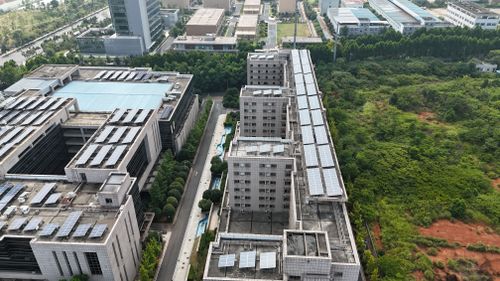
Karachi’s climate presents several factors that should be considered when selecting industrial solar mounting systems.
High temperatures, airborne dust, humidity, pollution, and coastal exposure can place additional demands on outdoor materials.
For projects located closer to the Arabian Sea, salt-laden moisture can make corrosion management even more important.
Industrial areas can introduce their own environmental conditions depending on the processes taking place nearby.
A structure designed for a relatively dry inland environment should not automatically be considered suitable for every industrial site in Karachi.
Site conditions should influence material selection from the beginning.
Coatings Can Provide Protection
Steel remains widely used for solar structures because it offers strength and established fabrication methods.
However, steel requires appropriate protection when exposed to outdoor environments.
Protective coatings such as galvanization can help isolate steel from environmental exposure. The effectiveness of the protection depends on coating quality, thickness, fabrication practices, installation, and subsequent damage.
Cut edges, scratches, drilled areas, welds, and damaged surfaces can become potential points of deterioration.
For commercial solar structures Karachi projects, the protective treatment should therefore be considered as part of the structural specification rather than an afterthought.
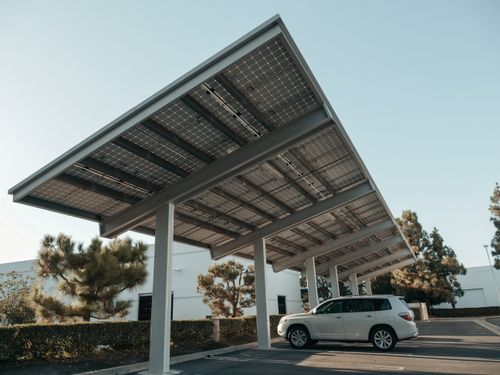
Connections Deserve Special Attention
A solar structure is not only made up of large beams and rails.
Bolts, clamps, brackets, anchors, and connection points are essential to transferring loads safely.
A structure can appear strong while its connections gradually deteriorate.
Different materials used together can also require careful consideration because of potential galvanic corrosion.
This makes material compatibility important when designing corrosion resistant solar structures.
Fasteners and connection components should be selected according to the environment and structural requirements rather than simply choosing the cheapest available option.
FRP Can Offer Another Material Option
Fiber-reinforced polymer, commonly known as FRP, has gained attention for applications where corrosion resistance, low weight, and electrical properties are valuable.
FRP solar structures can provide an alternative to conventional metal structures in suitable applications.
FRP does not corrode through the same electrochemical mechanism as conventional steel. This can be particularly relevant in environments where moisture, salt, or chemicals create greater corrosion concerns.
Its relatively low weight can also provide advantages during transportation and installation.
However, FRP should not be treated as a universal replacement for steel.
The correct profile, resin system, fiber orientation, connection method, UV resistance, loading requirements, and engineering design all need to be evaluated for the specific project.
Why Industrial Projects Need More Than Standard Designs
An industrial solar project may cover a large rooftop or installation area.
It may also include unusual roof geometry, equipment, ventilation systems, drainage channels, maintenance pathways, and other infrastructure.
A standard mounting frame may not account for all these factors.
A proper industrial solar mounting design should consider:
- Site conditions
- Roof structure
- Wind loads
- Panel configuration
- Material properties
- Corrosion exposure
- Drainage
- Maintenance access
- Cable routing
- Structural connections
The larger the solar installation, the more important these considerations become.
Wind Loads and Structural Stability
Corrosion resistance is only one part of long-term structural performance.
Solar panels create additional surfaces that interact with wind. Elevated panels can experience uplift and other forces that need to be transferred safely through the mounting system and into the building or foundation.
Corrosion can become particularly concerning when it gradually reduces the condition of components that are already exposed to environmental loads.
A strong industrial solar structures Karachi project therefore needs both appropriate material protection and sound structural engineering.
Maintenance Still Matters
Even highly corrosion-resistant materials require inspection.
Owners should periodically check for:
- Surface deterioration
- Loose fasteners
- Damaged coatings
- Connection problems
- Cracks or physical damage
- Water accumulation
- Signs of corrosion
- Changes in structural alignment
Early identification is generally easier to manage than extensive deterioration.
Maintenance should also include areas that are difficult to see from ground level.
For large industrial arrays, professional inspections can provide greater visibility into the condition of the structure and its connections.
Choosing Between Steel and FRP
There is no single material that is correct for every solar project.
Steel can offer high strength, familiar fabrication methods, and extensive industry experience. With appropriate protective treatment, it can be suitable for many commercial and industrial installations.
FRP can provide advantages where low weight, corrosion resistance, and electrical non-conductivity are valuable.
The right decision depends on the project.
| Consideration | Conventional Steel | FRP |
| Structural strength | High | Application-dependent |
| Corrosion behaviour | Requires protection | Naturally corrosion-resistant |
| Weight | Generally higher | Generally lower |
| Electrical conductivity | Conductive | Non-conductive |
| Fabrication | Widely established | Requires specialised expertise |
| Environmental suitability | Depends on protection | Depends on material specification |
The comparison demonstrates why material selection should be based on engineering requirements rather than assumptions.
The Importance of Proper Installation
Even the best material can perform poorly if installed incorrectly.
Incorrect fastener tightening, unsuitable anchors, damaged coatings, poor alignment, inadequate drainage, and improper connections can all affect the long-term performance of a solar structure.
For commercial solar structures Karachi projects, installation should follow the approved design and manufacturer requirements.
Quality control during installation can be just as important as the original material selection.
How PIR Electronics Approaches Solar Structures
PIR Electronics works with solar structure solutions for residential, commercial, and industrial applications, including FRP-based mounting options.
For industrial customers, the structural conversation should begin with the site rather than a generic product.
The environment, available roof space, expected loads, panel arrangement, access requirements, and material suitability all influence the final design.
Where appropriate, FRP solar structures can be considered as part of a broader structural strategy, particularly for projects where corrosion resistance and reduced weight are important considerations.
The objective is to create a mounting solution that supports the solar array while considering the conditions it will face throughout its operating life.
Conclusion
The structure supporting a solar array is a long-term component of the installation.
For industrial projects, material selection should account for environmental exposure, structural loads, connection quality, maintenance requirements, and expected service life.
In Karachi, where industrial and coastal environments can expose materials to challenging conditions, industrial solar structures Karachi projects should be planned with corrosion resistance in mind from the beginning.
Steel with suitable protection can remain a practical option, while FRP solar structures may provide valuable advantages for specific applications.
The best solution is not necessarily the cheapest structure at installation. It is the structure designed for the environment, engineered for the loads, installed correctly, and capable of supporting the solar investment over the long term.
Planning an industrial solar project in Karachi? PIR Electronics can help assess suitable mounting options based on your site’s structural and environmental requirements.
FAQs
Why are corrosion resistant solar structures important for industrial projects?
Industrial solar structures can remain outdoors for many years and may face humidity, dust, pollution, salt exposure, and other environmental conditions. Corrosion-resistant materials and protective systems can help preserve structural integrity and reduce deterioration risks.
Are FRP solar structures suitable for industrial installations?
They can be suitable for specific applications. The project should be evaluated for structural loads, profile selection, UV exposure, connections, environmental conditions, and other engineering requirements before choosing FRP.
Does a galvanized steel structure eliminate corrosion?
No. Galvanization provides protective coverage, but damage, cut edges, connections, environmental exposure, and installation conditions can still influence long-term performance. Regular inspection remains important.