
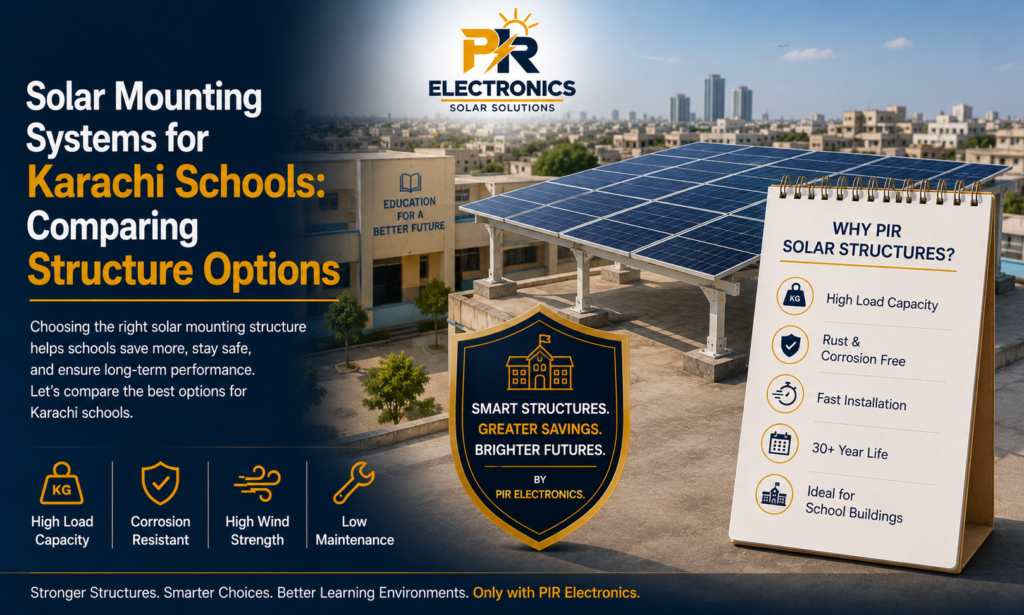
Schools in Karachi are exploring rooftop solar to support classrooms, laboratories, offices and computer facilities during daytime hours. Panels, however, are only as secure as the frame beneath them. Choosing solar mounting systems for Karachi schools means comparing strength, roof load, corrosion resistance, maintenance and long-term cost instead of selecting the lowest quotation.
School buildings may have concrete slabs, metal-sheet roofs, shaded assembly areas, water tanks or older extensions. The frame must suit these conditions while preserving safe access for students, staff and maintenance teams.
Table of Contents
Why the Mounting Structure Matters
A frame transfers panel weight and wind forces into the building. It also controls tilt, spacing, airflow and cleaning access. Poorly planned school solar structures Karachi can contribute to leakage, blocked drains, panel movement and unsafe rooftop routes.
The US Department of Energy’s photovoltaic design guidance explains that PV arrays need stable, durable mounting capable of supporting panels and resisting weather and corrosion over a long operating life.
A roof survey, structural review and layout plan should therefore come before material selection.
Option One: Galvanised Steel
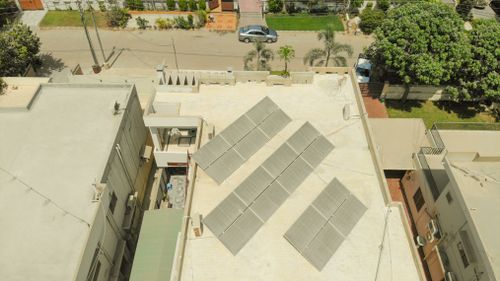
Properly engineered steel solar structures are widely used for institutional and commercial projects. Steel provides high strength and can be fabricated into low-height racks, elevated canopies and wide-span frames.
It may suit schools that want panels above parking or assembly areas. Local fabrication and repair are also practical. The main concerns are weight and corrosion. Damaged galvanising, exposed welds and weak bolts can develop rust, so periodic inspection and repainting may be needed. The roof must also support the combined weight of the frame, panels and anchors.
Option Two: Aluminium
Aluminium solar mounting systems are lightweight and generally corrosion resistant. Modular rails and clamps can suit roofs where reducing added dead load is important.
Lighter parts are easier to carry through staircases and restricted areas. Aluminium can also create a neat low-height layout for classroom blocks. However, profile grade, thickness, support spacing and connector quality must match the calculated loads.
Thin rails or inadequate bracing may deform under excessive wind pressure. Aluminium can also cost more than standard fabricated steel, depending on profile specifications and market conditions.
Option Three: Fiber-Reinforced Polymer
FRP solar mounting structures use profiles made from reinforcing fibres and polymer resin. Their benefits can include low weight, resistance to rust and electrical non-conductivity.
FRP may suit humid sites or schools seeking to reduce surface painting. Its lightweight profiles can also simplify rooftop handling.
Product quality still varies. Strength, ultraviolet resistance, resin type, fire behaviour and profile dimensions should be reviewed before approval. Metal fasteners need suitable protection, while anchors and profiles require inspection. FRP shouldn’t be described as completely maintenance-free.
Which Material Performs Best?
Steel normally offers the greatest fabrication flexibility and works well for elevated or heavy-duty frames. Aluminium reduces weight and suits modular rooftop arrays. FRP can be useful where corrosion resistance and electrical insulation are priorities.
There’s no universal winner. The best option depends on:
- Existing roof capacity
- Structure height
- Number of solar panels
- Wind exposure
- Available project budget
- Maintenance requirements
- Access for future repairs
- Local environmental conditions
A school should choose a mounting material only after assessing these factors.
Matching the Frame to the Roof
Concrete slabs may use anchored or carefully calculated ballasted arrangements. Metal-sheet roofs should transfer loads into suitable purlins or main structural members rather than relying only on thin roofing sheets.
The survey should identify cracks, leakage, weak areas, drains, skylights, tanks and planned extensions. The NREL Standard Work Specifications state that roof-mounted structures should be secured according to applicable instructions and roof penetrations should remain weather-tight.
An ageing roof should be repaired before installation. Removing panels later for major roof work can increase costs and interrupt school activities.
Wind, Height and Student Safety
Elevated frames can create useful shade, but greater height increases wind exposure. Taller structures normally need stronger columns, diagonal bracing and carefully designed anchors.
Safe school solar structures Karachi should leave clear walking routes and avoid blocking:
- Roof drains
- Staircases
- Parapet access
- Water tanks
- Emergency exits
- Firefighting routes
- Maintenance areas
Installation work should be separated from student movement. Tools, profiles, panels and loose materials must remain controlled throughout the project.
Panel rows should also provide enough space for cleaning and inspection. Crowded layouts may create shading, trap debris and make routine maintenance unsafe.
Solar Resource and Layout Planning
The World Bank’s solar maps for Pakistan highlight the country’s substantial solar resource. Strong sunlight alone, however, doesn’t guarantee good output.
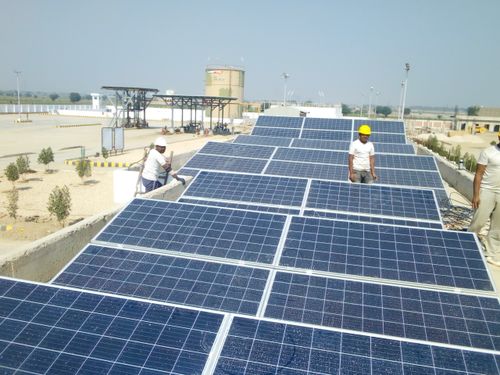
Orientation, tilt, shading, ventilation and cleanliness still influence performance. Nearby buildings, trees, water tanks and rooftop walls should be considered when positioning panels.
Both aluminium solar mounting systems and heavier frame options should maintain suitable clearance without creating unnecessary height. Layout planning must balance electricity generation with roof access, drainage and future maintenance.
Comparing Quotations and Lifecycle Cost
Schools shouldn’t compare offers only by cost per kilowatt. Quotations should identify:
- Material grade
- Profile dimensions
- Support spacing
- Bracing arrangement
- Anchor type and quantity
- Panel clamps
- Waterproofing method
- Installation warranty
- Maintenance requirements
Low-priced steel solar structures may become costly if poor coating leads to repeated rust treatment. Aluminium may offer little value if undersized profiles are used. Likewise, FRP solar mounting structures should be assessed through technical specifications rather than broad corrosion-resistance claims.
Lifecycle cost also includes inspections, repainting, fastener replacement, roof repairs and possible panel removal. A higher initial price may be reasonable when it reduces future maintenance and protects the building.
Choosing a Structure Provider
A qualified provider should inspect the site, review structural conditions and explain why a particular material suits the school. Institutions evaluating solar panel mounting and structural solutions should request layout drawings, anchor details, material specifications, warranty terms and a clear installation scope.
The quotation should separate structural work from panel mounting, electrical installation, waterproofing and maintenance. This helps school management compare proposals fairly and understand who is responsible for each stage.
The provider should also explain whether the proposed system will affect roof warranties, drainage, future construction or access to existing equipment.
Maintenance After Installation
Every mounting material needs inspection. Aluminium solar mounting systems require checks for loose clamps and connection problems, while steel solar structures need coating and corrosion review.
Similarly, FRP solar mounting structures should be examined for cracks, impact damage, movement and weakened connections. Bolts, anchors, waterproofing and cable supports should also be checked after severe weather or rooftop repair work.
Any unusual vibration, panel movement, rust, cracking or leakage should be investigated promptly. School staff shouldn’t modify braces, remove bolts or add panels without technical approval.
Final Thoughts
Selecting solar mounting systems for Karachi schools requires a balanced comparison of strength, weight, corrosion resistance, maintenance and cost. The right choice should follow a roof survey, structural calculations and a school-specific layout.
Well-designed school solar structures Karachi protect the modules, the building and everyone using the premises. Material choice matters, but engineering, anchoring, waterproofing and installation quality determine whether the system remains safe and dependable.
FAQs
Which mounting material is best for schools?
There’s no single best material. Steel may suit elevated heavy-duty frames, aluminium can reduce roof load, and FRP may help where corrosion resistance is a priority.
Can solar panels provide shade over a playground?
Yes, but an elevated canopy requires additional engineering because height changes wind forces, bracing and foundation requirements.
Are lightweight structures always safer?
No. Lower weight can reduce dead load, but the complete frame must still resist uplift, movement and environmental exposure.
Should an old school roof be repaired first?
Yes. Existing cracks, leakage, corrosion and weak structural areas should be addressed before mounting begins.