Solar panels are designed to provide electricity for many years, but the performance and safety of a solar system depend on more than just the panels.
The structure supporting the panels plays a critical role in maintaining system stability. Over time, exposure to Karachi’s weather conditions, dust, humidity, pollution, and coastal environment can weaken mounting systems.
Many solar owners focus on inverter performance and panel output but ignore the condition of the structure underneath.
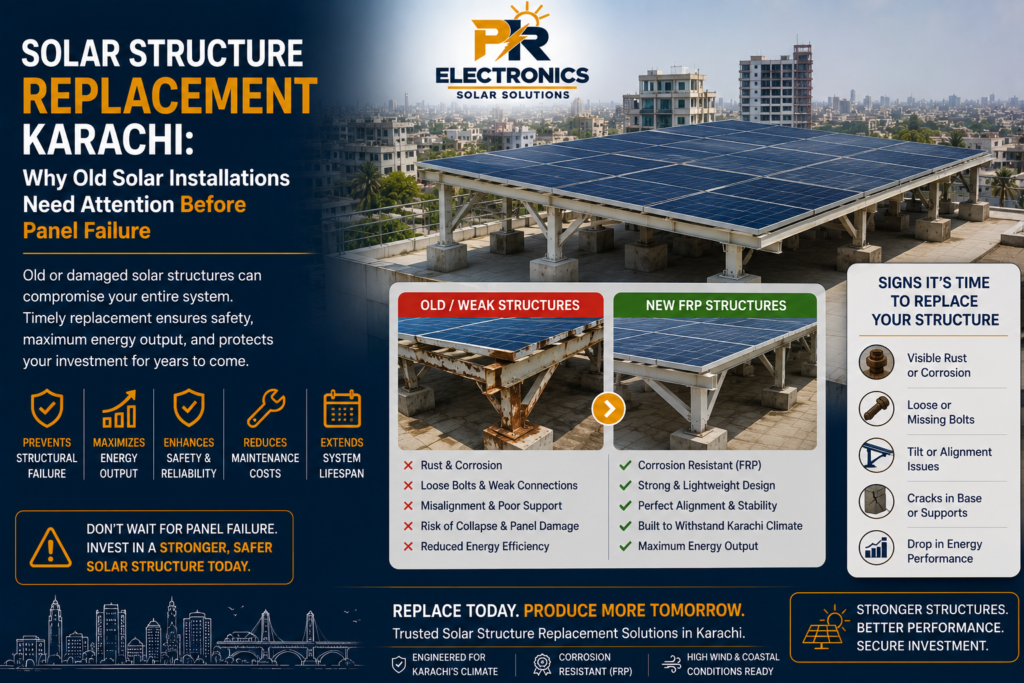
For older installations, solar structure replacement Karachi is becoming an important requirement as rust, loose connections, and weakened frames can create serious risks before visible panel damage appears.
A damaged mounting structure does not only affect safety. It can also reduce solar system reliability and increase long-term maintenance costs.
Table of Contents
Why Old Solar Structures Start Developing Problems
When solar systems are installed, the mounting structure is expected to support panels under different environmental conditions.
However, Karachi’s environment creates continuous stress on these structures.
Common causes of structural deterioration include:
- Humidity exposure
- Coastal air and salt particles
- Heavy dust accumulation
- Monsoon rainfall
- Poor-quality materials
- Improper installation
- Lack of maintenance
Over several years, these factors can weaken metal frames, fasteners, brackets, and support points.
A system may continue producing electricity while the supporting structure slowly becomes unsafe.
This is why regular evaluation and timely old solar system repair can prevent larger problems in the future.
Rust Is an Early Warning Sign
One of the most common issues found in older solar installations is corrosion.
Rust may initially appear as a small surface problem, but it can gradually affect the strength of the structure.
Areas that require attention include:
- Mounting rails
- Bolts and fasteners
- Support brackets
- Metal joints
- Base connections
When corrosion weakens these components, the structure may lose its ability to properly hold the solar panels.
For Karachi properties, especially areas exposed to humidity and coastal conditions, corrosion resistance should be a major consideration when evaluating older solar structures.
Loose Frames Can Become a Safety Risk
Solar panels experience pressure from wind, weather, and their own weight.
If mounting points become loose, the system may experience:
- Panel movement
- Misalignment
- Increased vibration
- Structural instability
In extreme situations, weak mounting can create safety hazards for buildings, vehicles, and nearby areas.
A professional solar safety inspection can identify these issues before they become expensive repairs.
During inspection, experts evaluate:
- Frame condition
- Fastener tightness
- Visible corrosion
- Panel alignment
- Mounting stability
- Support strength
Early identification allows owners to make informed decisions instead of waiting for structural failure.
Why Panel Replacement Is Not Always the First Solution
Many solar owners assume that declining performance means they need new panels.
However, the problem may not always be the panels themselves.
A weak mounting system can create issues that affect overall solar reliability.
Before investing in new panels, owners should evaluate:
- Existing structure condition
- Installation quality
- Corrosion level
- Roof condition
- Mounting safety
Replacing a damaged structure can protect existing panels and extend the useful life of the complete solar system.
This makes solar structure replacement Karachi a practical solution for many older installations.
Karachi’s Older Solar Systems Need Modern Solutions
Solar adoption in Karachi has increased significantly over the past decade. Many early installations used traditional structures that may not have been designed for long-term exposure to Karachi’s environmental conditions.
Today, solar owners are looking for solutions that provide:
- Better corrosion resistance
- Lower maintenance requirements
- Longer service life
- Improved safety
This has increased interest in modern materials such as FRP solar structures.
Fiber Reinforced Polymer (FRP) structures offer advantages including lightweight design and resistance against corrosion.
Unlike traditional metal structures, FRP does not rust through the same process, making it suitable for environments where moisture and corrosion are major concerns.
When Should Solar Owners Consider Structure Replacement?
Not every old solar system immediately requires replacement.
However, owners should consider professional evaluation when they notice:
- Visible rust on mounting frames
- Loose or moving panels
- Unusual panel alignment
- Damaged brackets
- Water-related corrosion
- Repeated maintenance issues
- Structure instability
A qualified inspection can determine whether repair is enough or complete replacement is the safer option.
Ignoring structural problems can increase repair costs later and may put the entire solar investment at risk.
PIR Electronics Approach to Solar Structure Replacement
PIR Electronics provides solar structure solutions, including inspection, replacement planning, and modern FRP-based mounting options for solar installations.
For customers requiring solar mounting structure Karachi services, PIR Electronics focuses on evaluating existing conditions before recommending the right solution.
The process includes understanding:
- Current structure condition
- Installation environment
- Rooftop requirements
- Safety concerns
- Long-term performance goals
Instead of replacing structures without assessment, the objective is to provide a practical solution based on the actual condition of the solar installation.
Why FRP Solar Structures Are a Suitable Upgrade Option
For older solar installations experiencing corrosion problems, upgrading to FRP solar structures can provide a more durable alternative.
Benefits include:
- Corrosion resistance
- Lightweight construction
- Reduced maintenance needs
- Long-term durability
- Better suitability for challenging environments
For Karachi’s climate, choosing the right material can significantly influence the future reliability of a solar installation.
Final Thoughts
Solar panels are a long-term investment, but the structure supporting them requires equal attention.
For older systems installed in Karachi, rust, loose mounting points, and structural weakness can become serious concerns if ignored.
A professional inspection helps identify problems early and allows owners to protect their solar investment.
Choosing solar structure replacement Karachi services at the right time can improve safety, reduce future maintenance costs, and extend the reliability of an existing solar system.
With modern solutions such as FRP-based mounting systems, solar owners can upgrade older installations and prepare them for years of dependable performance.
FAQs
How Do I Know If My Solar Structure Needs Replacement?
Signs include rust, loose frames, unstable panels, damaged supports, and visible structural weakness.
Can Old Solar Panels Be Used With a New Structure?
Yes. In many cases, existing panels can continue working after the mounting structure is replaced.
Why Do Karachi Solar Structures Face Corrosion Problems?
Humidity, coastal air, dust, and rainfall can accelerate corrosion, especially in poorly protected metal structures.
What Is the Benefit of FRP Solar Structures?
FRP solar structures provide corrosion resistance, lightweight design, and lower maintenance requirements.
Does PIR Electronics Inspect Existing Solar Structures?
Yes. PIR Electronics evaluates existing installations and helps determine whether repair or replacement is required.